

The gig economy has exploded in recent years, with millions of freelancers and independent workers providing services across a wide variety of industries. However, one of the persistent challenges freelancers face is receiving timely, secure, and cost-efficient payments. Traditional payment methods, including bank transfers and third-party payment services, often come with high transaction fees, delays, and limitations, especially for international payments. To solve these issues, businesses and platforms are turning to white label crypto wallets, which enable instant, low-cost payments and give freelancers more control over their earnings. This article explores how white label crypto wallets are transforming the gig economy by enabling secure and efficient micropayments for freelancers.
The Rise of the Gig Economy
The gig economy refers to the growing sector of the workforce that operates on short-term contracts or freelance work, rather than traditional, long-term employment. Freelancers today contribute to a range of industries, from tech and creative fields to finance, marketing, and hospitality. According to recent reports, freelancers now make up a significant portion of the global workforce, with millions of workers choosing flexible, independent careers.
However, one common challenge freelancers face is payment delays. Traditional financial systems often rely on banks or third-party payment processors, which can result in delayed payments, high fees, and long processing times—especially for international transactions. These issues make it difficult for freelancers to maintain consistent cash flow, and they reduce the efficiency of freelance platforms. This has created a need for faster, more flexible, and cheaper payment solutions.
What is a White Label Crypto Wallet?
A white label crypto wallet is a pre-built cryptocurrency wallet that businesses can customize and rebrand as their own. These wallets enable users to store, send, and receive digital currencies like Bitcoin, Ethereum, or stablecoins in a secure environment. White label wallets allow businesses to integrate these features directly into their platforms, offering users a seamless experience under their branding, without having to build the infrastructure from scratch.
Key Features of White Label Crypto Wallets:
- Multi-currency support. They support a wide variety of cryptocurrencies and tokens, enabling freelancers to receive payments in different digital currencies, including stablecoins for value stability.
- Security. Advanced security measures such as biometric authentication, encryption, and multi-signature capabilities ensure that freelancers’ earnings are safely stored.
- Customization. The wallet’s interface, branding, and features can be fully customized, ensuring businesses can offer a tailored experience to their customers.
- Blockchain integration. White label wallets seamlessly integrate with blockchain networks, enabling secure and transparent transactions.
For businesses operating in the gig economy, white label crypto wallets offer a perfect solution to streamline the payment process and empower freelancers with faster and more secure payment methods.
How White Label Crypto Wallets Enable Instant Payments for Freelancers
White label crypto wallets leverage blockchain technology to provide freelancers with instant payments. Here’s how they make it possible:
- Instant transactions. Traditional payment methods can involve significant delays, especially for international transfers. Blockchain technology allows for near-instantaneous transactions, eliminating the need for middlemen and providing freelancers with faster access to their funds.
- Low transaction fees. One of the biggest barriers to micropayments has been the high transaction fees charged by payment processors. By bypassing intermediaries, white label crypto wallets reduce transaction costs, making micropayments more feasible for freelancers and clients alike.
- Global reach. Freelancers around the world can benefit from white label crypto wallets. Cryptocurrency transactions are borderless, enabling instant, cost-effective payments across different currencies and regions. This is especially important for international freelancers, who can avoid hefty currency conversion fees and delays associated with bank transfers.
- Cross-platform integration. White label crypto wallets can integrate with a variety of payment systems, such as Google Pay, Apple Pay, Visa, and MasterCard, allowing freelancers to receive payments in both crypto and fiat, depending on their preference.
Benefits of White Label Crypto Wallets for Freelancers
- Faster payments. Freelancers benefit from instant payments, which helps maintain consistent cash flow and removes the frustration of waiting for lengthy bank processing times. Whether it’s a one-time payment or recurring payments for ongoing contracts, blockchain technology ensures that funds are transferred quickly and securely.
- Lower fees. With lower transaction fees, white label crypto wallets enable freelancers to keep more of their hard-earned money. Traditional payment systems can charge significant fees for international payments or even domestic transfers, especially for smaller amounts. Crypto wallets cut these fees drastically, making it easier for freelancers to manage small transactions.
- Greater control over payments. Freelancers can take full control of their earnings with a non-custodial crypto wallet. They don’t need to rely on banks or third-party services to access their money, giving them more autonomy over how and when they use their funds.
- Secure transactions. Blockchain’s decentralized and immutable nature ensures that transactions are secure and verifiable. Freelancers can have peace of mind knowing that their payments are recorded on an unalterable ledger, reducing the risk of fraud.
- Currency flexibility. Freelancers can receive payments in multiple cryptocurrencies, allowing them to choose the most beneficial currency for their needs. Stablecoins, for example, can provide a more stable form of payment, protecting against market volatility.
Real-World Examples of White Label Crypto Wallets Supporting the Gig Economy
- Freelance platforms. Many freelance platforms (like Upwork or Fiverr) are exploring ways to implement cryptocurrency payments for freelancers. By integrating white label crypto wallets, these platforms can ensure instant and secure payments, even for international clients, helping to eliminate delays and reduce transaction fees.
- Content creators. Platforms like YouTube or Patreon, where content creators are paid for their work, could benefit from white label crypto wallets. By enabling creators to receive payments in cryptocurrencies or stablecoins, these platforms can offer faster, cheaper transactions, increasing creators’ earning potential.
- Gaming. In the gaming industry, players who earn in-game currency or rewards for their efforts can use white label wallets to store and convert their digital assets into real-world value. These wallets make it easy for gamers to instantly exchange earnings or purchase in-game items without the need for traditional payment methods.
- Global freelance services. A platform providing freelance services globally can use white label crypto wallets to handle payments in cryptocurrencies. For example, developers, designers, and writers working for international clients can receive instant payments in their preferred digital currency, avoiding high conversion fees or delays.
White Label Crypto Wallet: Walletverse
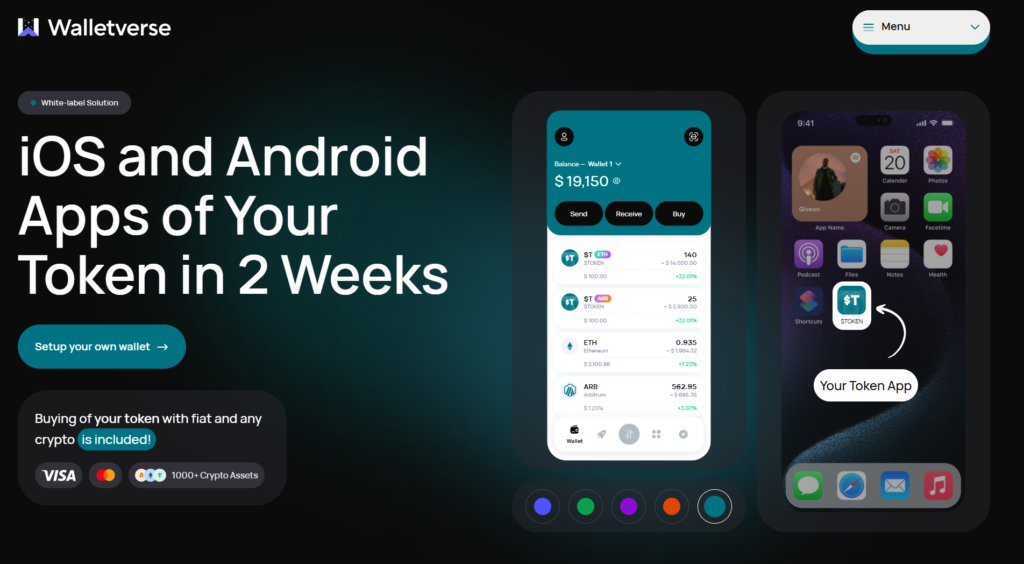
An excellent example of a white label crypto wallet solution is Walletverse, a non-custodial mobile cryptocurrency wallet. Walletverse allows businesses to launch their own branded wallet within two weeks, offering features such as biometric protection, advanced encryption (CryptoAES), and multi-signature authentication to ensure secure transactions.
Supporting over 1000 cryptocurrencies, Walletverse allows freelancers to receive payments in multiple digital currencies, providing a flexible and cost-efficient payment solution. Its integration with major payment systems such as Visa, MasterCard, Google Pay, and Apple Pay ensures that businesses can accept both crypto and fiat payments, enabling seamless cross-border transactions.
For businesses in the gig economy, Walletverse offers an efficient, secure, and customizable solution that enhances payment processes and supports freelancers in managing their earnings effortlessly.
How White Label Crypto Wallets Improve Payment Efficiency in the Gig Economy
- Automated payment systems. Businesses can automate payments to freelancers using smart contracts. For example, payments can be released automatically when specific milestones are met, ensuring freelancers are paid promptly and accurately.
- Global payment networks. White label wallets can integrate with various payment systems to allow cross-border payments without high conversion rates or delays. This flexibility increases the reach of freelance platforms and provides a better experience for both employers and freelancers.
- Micro-transactions. Freelancers working on small tasks or micro-jobs benefit from low transaction fees with white label crypto wallets. Crypto wallets make small payments feasible, even for tiny projects that would otherwise be uneconomical to process through traditional financial systems.
Addressing Challenges in Implementing White Label Crypto Wallets for Freelancers
- Regulatory compliance. Many countries have varying regulations concerning cryptocurrency payments. Businesses using white label wallets need to ensure compliance with local regulations, including anti-money laundering (AML) and know-your-customer (KYC) standards.
- User education. Not all freelancers are familiar with cryptocurrencies. Businesses should provide educational resources to help freelancers understand how to use white label wallets for payments, how to store their funds securely, and how to make the most of the wallet features.
- Blockchain scalability. As businesses scale, blockchain transaction volumes may increase. Ensuring that the white label wallet solution can handle high transaction volumes efficiently will be key to maintaining a smooth payment experience as the platform grows.
The Future of White Label Crypto Wallets in the Gig Economy
- Increased adoption of cryptocurrencies. As cryptocurrencies become more widely accepted, white label crypto wallets will play a pivotal role in transforming the gig economy by making crypto payments mainstream.
- DeFi integration. Freelancers could leverage decentralized finance (DeFi) features through white label wallets, allowing them to earn interest on their earnings, stake digital assets, or participate in liquidity pools—all from within the same wallet.
- Blockchain interoperability. The future of payments in the gig economy may include interoperability between different blockchains, enabling freelancers to receive payments in a variety of digital assets and easily convert or trade them using their white label wallet.
White label crypto wallets are a game-changer for the gig economy, providing freelancers with faster, cheaper, and more secure payment methods. By enabling instant payments, reducing transaction fees, and offering global accessibility, white label wallets empower freelancers to manage their earnings efficiently. With growing adoption and continued advancements in blockchain technology, businesses can leverage white label crypto wallets to create a seamless and rewarding payment experience for freelancers worldwide.