

The real estate industry has long been burdened by slow transaction processes, costly intermediaries, and layers of documentation. In an age where instant payments and digital ownership are becoming the norm, these inefficiencies are ripe for disruption. Blockchain technology—and more specifically, white label crypto wallets—are offering a new way to conduct property transactions with greater speed, transparency, and global reach. These wallets are now poised to revolutionize how buyers, sellers, and investors interact in the real estate market.
The Intersection of Blockchain and Real Estate
Blockchain has introduced new paradigms to the real estate industry, including digital property titles, tokenized real estate assets, and decentralized escrow systems. Tokenization allows properties to be divided into digital shares, making real estate investment more accessible to a wider range of investors. Moreover, the use of smart contracts can automate complex agreements and reduce the need for middlemen. To enable these innovations at scale, secure and user-friendly wallets are essential—making white label crypto wallet solutions an ideal foundation for blockchain-powered property platforms.
What Are White Label Crypto Wallets and Why They Matter in Real Estate
White label crypto wallets are pre-built wallet infrastructures that businesses can customize, brand, and deploy as their own. In the real estate sector, these wallets allow agencies, property developers, and marketplaces to provide clients with a dedicated platform for managing crypto payments and property-backed tokens.
With full control over wallet design, features, and supported assets, real estate businesses can simplify the buying and investing experience. By cutting out third-party custodians and offering branded digital tools, they also increase user trust—especially in high-value transactions.
Use Cases of White Label Crypto Wallets in Real Estate
White label crypto wallets can power a wide range of innovative real estate applications:
- Tokenized property investments. Investors can buy fractions of properties using crypto through a branded wallet.
- Direct crypto property sales. Buyers can pay developers or sellers directly in BTC, ETH, or stablecoins.
- Smart contract escrow. Funds are securely held in a contract and released automatically once terms are met.
- Cross-border transactions. Crypto payments eliminate currency conversion issues and international banking delays.
- Rental income automation. Property managers can use smart contracts to distribute rent in real time.
These use cases create efficiency, lower costs, and open new revenue models in both commercial and residential real estate.
Features That Enable Secure and Compliant Property Transactions
To support real estate deals, white label crypto wallets must offer more than just basic functionality. Key features include:
- Smart contract integration. Automates agreements, deposits, and escrow mechanisms.
- Stablecoin & token support. Ensures payments can be made with low-volatility assets like USDT or USDC.
- Multi-signature authorization. Adds layers of approval for high-value transactions.
- AML/KYC compliance modules. Helps platforms verify user identities and remain compliant in regulated markets.
- Transaction history & audit tools. Offers complete transparency for reporting and dispute resolution.
- Fiat On/Off-Ramps. Allows seamless transitions between traditional money and crypto.
These capabilities ensure the integrity of property transactions while enhancing speed and convenience.
Business Advantages for Real Estate Firms and Platforms
Integrating a white label crypto wallet offers compelling benefits:
- Reduced transaction costs. Fewer intermediaries mean lower fees and faster closings.
- Global buyer access. Accepting crypto enables sales to international investors without banking restrictions.
- Stronger brand loyalty. Branded wallets reinforce trust and professionalism.
- Revenue opportunities. Platforms can monetize features such as transaction fees, token issuance, and escrow services.
- Real-time liquidity. Crypto payments eliminate delays tied to banking hours or jurisdictional constraints.
These advantages make crypto wallet adoption a strategic asset for future-forward real estate players.
Walletverse: Powering Real Estate Transactions with White Label Crypto Wallets
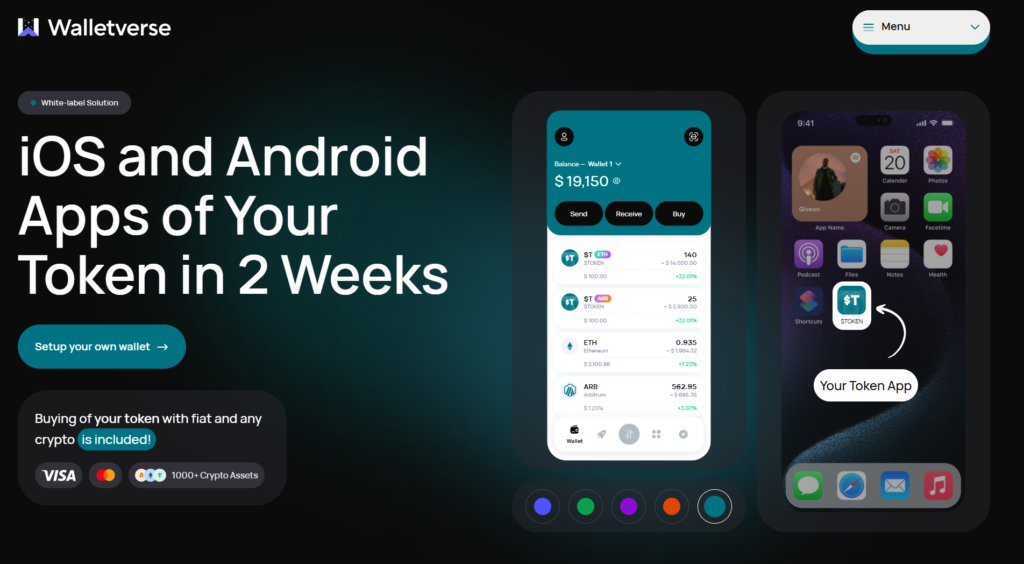
Walletverse is a non-custodial white label crypto wallet designed for fast, secure, and enterprise-ready deployment—making it a powerful tool for real estate innovation. Supporting over 1000 cryptocurrencies, Walletverse enables property businesses to launch their branded wallets in just two weeks.
Key features include:
- dApps, NFT, and DeFi integration
- Biometric and passcode protection
- Fiat compatibility with Visa, MasterCard, Apple Pay, and Google Pay
- AML functionality and security standards like CryptoAES, ECDSA, OWASP SAST
- Support for BIP32, BIP39, and BIP44 seed phrase protocols
- Secure entropy storage (128-bit and 256-bit)
For real estate firms looking to facilitate crypto payments, and offer tokenized property investment, or launch compliant digital escrows, Walletverse delivers a ready-made, customizable solution that combines robust technology with regulatory peace of mind.
How to Get Started: Implementing White Label Wallets in Real Estate
Businesses can begin integrating crypto wallets into their real estate operations by following these steps:
- Define the use case (e.g., property sales, investment, rent collection).
- Choose a white label wallet provider with blockchain and compliance expertise.
- Customize wallet features to fit brand identity and transaction requirements.
- Integrate smart contracts for automating payments and escrows.
- Educate stakeholders—buyers, agents, investors—on how to use the new system.
- Launch, test, and scale the platform as adoption grows.
This approach enables rapid entry into crypto-powered real estate with minimal development effort.
Conclusion: Unlocking the Future of Real Estate with White Label Crypto Wallets
The real estate industry is evolving, and blockchain-powered tools are leading the way. White label crypto wallets enable businesses to digitize property transactions, increase transparency, and cater to a new generation of crypto-savvy buyers. From tokenized assets to real-time payment settlement, the transformation is well underway—and platforms like Walletverse are giving real estate firms the secure, scalable tools they need to participate in this next frontier.