

In an era of digital surveillance, data tracking, and financial profiling, privacy has become a top priority for consumers worldwide. From social media to online banking, users are becoming increasingly aware of how much of their personal information is monitored, stored, or shared without consent. This concern is driving a new wave of privacy-first financial products—especially within the crypto ecosystem. At the heart of this transformation are white label crypto wallets, which allow businesses to deliver secure, non-custodial, and customizable wallet experiences built around user privacy and autonomy.
What Are Privacy-First Financial Products?
Privacy-first financial products are tools designed to protect users’ identity, transaction history, and asset holdings from external visibility and centralized control. These products include:
- Private crypto wallets
- Stealth addresses and masked transactions
- Privacy-focused coins such as Monero and Zcash
- Non-custodial DeFi applications that avoid storing user data
- Decentralized mixers and zero-knowledge-based payment platforms
Privacy-first financial solutions are especially critical in industries like digital banking, cross-border remittances, and personal wealth management—where exposure of personal data can lead to risk, censorship, or loss of financial freedom.
Challenges in Building Privacy-Preserving Finance Tools
Despite their growing demand, privacy-focused financial platforms face multiple challenges:
- Regulatory pressure related to KYC, AML, and anti-terrorism compliance
- Technical complexity in deploying privacy-preserving tech like zero-knowledge proofs or mixers
- Infrastructure gaps, such as wallets that don’t support private token standards
- Dependence on third-party custodians, who may track or restrict transactions
These hurdles often deter projects from launching privacy-oriented products—especially when building from scratch is costly and time-consuming.
The Role of White Label Crypto Wallets in Enabling Privacy
White label crypto wallets solve these challenges by offering pre-built, customizable wallet infrastructure that businesses can deploy under their own brand. These wallets can be tailored to prioritize privacy at every layer—from UI and security settings to token support and smart contract interactions.
Benefits of white label wallets in privacy-first applications:
- Full control over features, logic, and branding
- No third-party custody, ensuring users retain control of their private keys
- Modular security, allowing businesses to implement stealth addresses or zk-based payments
- Custom analytics that avoid invasive user tracking or centralized storage
These wallets provide the flexibility to comply with local laws while protecting users in sensitive regions or high-risk categories.
Key Privacy Features in White Label Wallets
To support privacy-first financial products, modern white label wallets often include:
- Stealth address generation to conceal sender/receiver identities
- Private token support such as Monero, Zcash, and TornadoCash-compatible assets
- Client-side encryption to secure wallet data locally on the user’s device
- No metadata storage or analytics tracking
- Biometric authentication and PIN protection
- Integration with zk-rollups, mixers, and privacy-preserving protocols
These features create a safer environment for users who value discretion and digital sovereignty.
Business Benefits of Offering Privacy-First Wallet Products
For businesses:
- Stand out in an increasingly competitive DeFi and fintech landscape
- Serve global markets that demand privacy—including underserved or politically restricted regions
- Avoid reliance on centralized service providers
- Build long-term trust and credibility among privacy-conscious users
For users:
- Maintain full control over their data and digital assets
- Avoid surveillance, censorship, or unwanted financial profiling
- Access secure financial tools without giving up personal freedoms
- Confidently participate in crypto ecosystems with anonymity and safety
Privacy-first wallets offer ethical innovation that meets the modern expectations of decentralized technology users.
Walletverse: Supporting Privacy-Centric Wallet Deployments
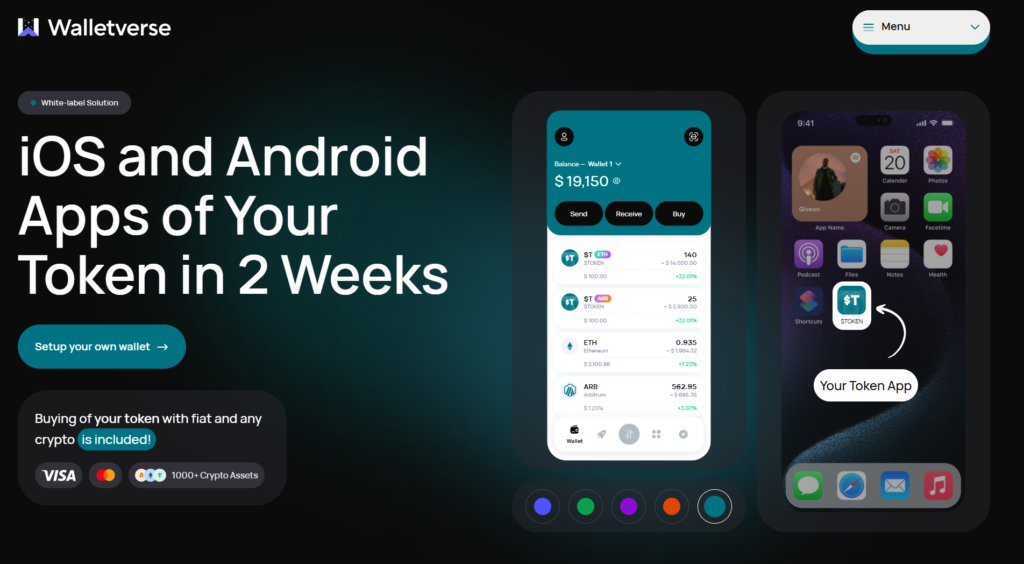
Walletverse is a non-custodial white label crypto wallet designed for businesses building secure, scalable, and privacy-focused financial tools. Deployable in under two weeks, Walletverse supports over 1000 cryptocurrencies—including privacy coins—and provides full flexibility in customization.
Privacy and security features of Walletverse include:
- Biometric login, passcode protection, and client-side encryption
- Integration readiness with zk-rollups, stealth address protocols, and privacy tokens
- Support for Visa, MasterCard, Apple Pay, and Google Pay
- CryptoAES and ECDSA encryption standards
- OWASP SAST compliance for vulnerability scanning
- Seed phrase storage (BIP32, BIP39, BIP44) with secure entropy support (128/256-bit)
Walletverse empowers companies to build branded, privacy-first wallet products with the infrastructure to support secure user access, smart contract integration, and long-term compliance.
Use Cases for Privacy-Enabled Wallets
White label crypto wallets built for privacy have a wide range of use cases:
- Private wealth apps offering discreet portfolio management
- Global remittance services that protect sender and recipient identities
- NGO wallets in politically sensitive regions to safely distribute funds
- Donation and subscription platforms with anonymous recurring contributions
- Privacy-centric DeFi platforms where anonymity and freedom are foundational values
Each of these examples demonstrates the growing demand for wallet solutions that respect users’ right to privacy.
How to Launch a Privacy-First Wallet Product
Launching a privacy-focused wallet product can be efficient with the right tools:
- Define your user base and privacy requirements
- Select a white label wallet provider with proven privacy features and integrations
- Customize the wallet interface, branding, and privacy flows
- Integrate privacy-focused technologies, such as zk-SNARKs or stealth transaction protocols
- Educate users with clear documentation about privacy protections and best practices
- Launch and monitor, ensuring compliance and continual security testing
With white label solutions, businesses can focus on vision and user trust rather than infrastructure development.
Conclusion: Redefining Trust Through Privacy-First Wallet Innovation
As the world becomes increasingly digitized, privacy is no longer a luxury—it’s a necessity. White label crypto wallets offer businesses a turnkey path to deliver financial products that respect user autonomy, safeguard personal data, and align with the decentralized ethos of blockchain technology. With platforms like Walletverse, organizations can empower users with secure, private, and branded access to the future of finance.