

Tokenization is redefining asset ownership. By converting real-world assets (RWAs) like real estate, commodities, and collectibles into blockchain-based tokens, businesses can unlock new forms of liquidity, accessibility, and automation. However, the real power of RWA tokenization lies in how those assets are held, managed, and interacted with—and that’s where white label crypto wallets come in.
More than just secure storage solutions, white label wallets act as customizable, branded gateways to the tokenized economy. They give enterprises a way to integrate digital asset ownership seamlessly into their existing platforms and user experiences.
What Are Tokenized Real-World Assets (RWA)?
Real-world asset (RWA) tokenization involves creating blockchain tokens that represent ownership rights to physical or traditional financial assets. These tokens can be fractional, transferable, and programmable through smart contracts.
Examples of RWAs include:
- Real estate (commercial, residential, REIT shares);
- Precious metals (e.g., gold-backed tokens);
- Art and luxury goods (authenticated NFT-based representations);
- Invoices, receivables, and debt instruments;
- Bonds, private equity, and other securitized financial products.
Tokenizing these assets introduces major benefits:
- Fractional ownership – lowering the barrier to entry for investors;
- Increased liquidity – enabling 24/7 trading on secondary markets;
- Improved transparency – verifiable, on-chain ownership and transaction history;
- Faster settlement – reducing the need for intermediaries.
The Challenge: RWA Tokenization Without Wallet Infrastructure
Tokenizing an asset is only part of the equation. Once created, those tokens must be stored, accessed, and transferred by users—often unfamiliar with crypto tools. Without a user-friendly wallet experience, even the most sophisticated tokenized asset model can struggle to achieve adoption.
Common challenges include:
- Lack of intuitive interfaces for interacting with tokenized assets;
- Fragmented user experiences for onboarding, KYC, and asset tracking;
- Limited support for security token standards like ERC-1400;
- Concerns over custody, privacy, and regulatory compliance.
That’s where white label crypto wallets make a critical difference.
How White Label Wallets Enable Real-World Asset Tokenization
White label crypto wallets are pre-built, customizable applications that businesses can brand and deploy as their own. In the RWA space, they serve as the core user interface through which investors, asset managers, and platforms engage with tokenized assets.
These wallets allow:
- Secure custody of RWA tokens (ERC-20, ERC-721, ERC-1400);
- Easy onboarding with integrated KYC and user verification;
- Direct interaction with tokenized assets—transfer, view, trade, or stake;
- Integration with token issuance platforms and smart contract logic;
- Branded UI/UX aligned with the platform or institution’s identity.
Instead of sending users to third-party apps, companies can provide a seamless, trust-enhancing experience through their own branded wallet.
Key Features of White Label Wallets for RWA Projects
A wallet designed for tokenized assets should include the following capabilities:
- Multi-token support. Including fungible (ERC-20), non-fungible (ERC-721), and hybrid/securities tokens (ERC-1400/ERC-3643);
- Compliance readiness. Tools for KYC/AML checks, whitelisting, and role-based permissions;
- Portfolio dashboards. Visualize asset values, income streams, and performance;
- Smart contract integration. Enable dividend distribution, voting rights, or vesting schedules;
- Secure access. Biometric login, non-custodial private key storage, passcode protection;
- Fiat on/off ramps. Enable users to move seamlessly between traditional and tokenized finance;
These features ensure that tokenized assets are not only compliant and secure—but also user-friendly and functional at scale.
Real-World Use Cases for RWA Tokenization with Wallets
Real Estate Platforms
Offer fractional ownership of property portfolios via tokenized shares, with rental income distributed through smart contracts and tracked in the wallet.
Invoice Financing
Tokenize outstanding invoices or receivables to give businesses instant liquidity—investors manage and redeem their tokens via the wallet.
Commodities and Precious Metals
Provide investors with digital tokens backed by physical gold or silver, which can be traded, held, or redeemed through their wallet interface.
Luxury Goods and Art
Authenticate ownership of rare items via NFTs. Each piece is linked to metadata and verification certificates managed inside the wallet.
Carbon Credits and ESG Assets
Enable tokenized trading of verified carbon offsets, with real-time traceability and compliance via smart contract logic.
Walletverse: A White Label Wallet Built for Tokenized Asset Management
For companies entering the RWA tokenization space, Walletverse offers a powerful white label wallet solution that balances security, customization, and regulatory readiness.
Key capabilities of Walletverse include:
- Full support for tokenized securities and hybrid token standards;
- Fiat on-ramp functionality (Apple Pay, Google Pay, bank cards);
- In-app identity verification and role-based permissions;
- Multi-account functionality for managing diverse asset classes;
- Token gating and smart contract interaction;
- Scalable mobile apps for iOS and Android.
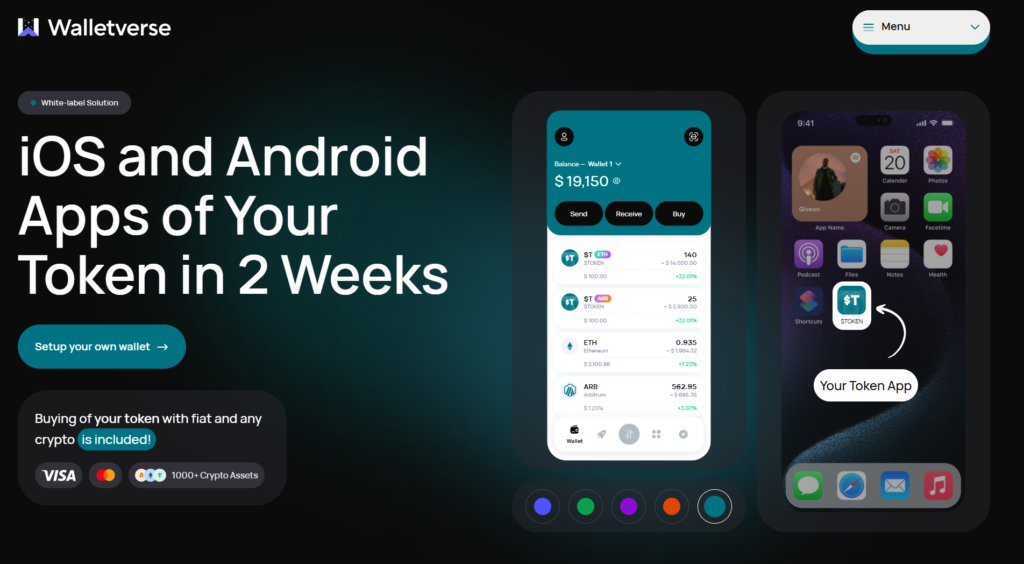
With Walletverse, asset tokenization platforms can provide users with a seamless way to hold, trade, and interact with real-world assets—under their own brand and within a compliant environment.
Implementing a White Label Wallet for Your RWA Project
Launching your own branded wallet for RWA management involves the following steps:
- Define your asset type and tokenization model (e.g., ERC-1400 for real estate securities);
- Choose the appropriate blockchain (Ethereum, Polygon, Avalanche, etc.);
- Partner with a wallet provider to configure branding, UI, and backend features;
- Integrate smart contracts for asset issuance, ownership transfer, and dividend distribution;
- Design user onboarding flow with built-in KYC, risk disclosures, and tutorials;
- Test compliance and security via audits and sandbox simulations.
With the right infrastructure, tokenized assets become accessible not just to crypto-natives, but to a new wave of mainstream investors.
The tokenization of real-world assets is poised to reshape global finance, but it requires infrastructure that bridges technical innovation with user trust. White label crypto wallets provide that bridge—delivering secure, branded, and compliant interfaces for managing tokenized assets at scale.
Whether you’re tokenizing real estate, commodities, or digital collectibles, deploying a white label wallet ensures your users can interact with these assets confidently and intuitively. The future of asset ownership is tokenized—and the wallet is the key that unlocks it.