

As cryptocurrencies become more integrated into everyday financial ecosystems, a significant shift is taking place in how payments are made. Peer-to-business (P2B) crypto payments are emerging as a secure, fast, and cost-effective alternative to traditional systems. Whether it’s an individual paying a freelancer, a customer buying a product from an online store, or a subscriber using crypto for a SaaS platform, P2B payments are driving a new wave of digital commerce. White label crypto wallets are playing a critical role in enabling businesses to securely accept these payments with custom-branded solutions.
Understanding P2B Payments in the Context of Cryptocurrency
P2B payments refer to direct transactions between an individual (peer) and a business entity using cryptocurrency. Unlike traditional peer-to-peer (P2P) transfers or business-to-business (B2B) transactions, P2B involves user-to-merchant flows for services, goods, or subscriptions.
This model is rapidly gaining traction in industries such as:
- E-commerce and digital marketplaces
- Software-as-a-Service (SaaS) platforms
- Online education and coaching services
- Digital content creation and influencer monetization
With the global adoption of Web3 technologies, these crypto-enabled payments offer speed, transparency, and accessibility that traditional systems often lack.
Challenges in Crypto-Based P2B Transactions Without Wallet Integration
Despite the advantages, crypto P2B payments face hurdles when not supported by integrated wallet solutions:
- Manual entry of wallet addresses can lead to errors and loss of funds.
- Security risks from phishing or compromised wallets can affect both parties.
- Inconsistent user experience, especially for less technical consumers.
- Regulatory concerns, such as AML compliance, may not be addressed in basic wallets.
- Lack of branding control limits business identity and trust during transactions.
These challenges create friction and discourage broader adoption, particularly among small and medium-sized enterprises (SMEs).
White Label Wallets as a Solution for Secure P2B Crypto Payments
White label crypto wallets offer a powerful alternative. Businesses can deploy their own branded wallets—complete with tailored features, payment flows, and security protocols—without building infrastructure from scratch.
These wallets provide:
- Custom interfaces for merchant invoicing and customer payments
- Integration with DeFi protocols for automated conversions (e.g., into stablecoins)
- Backend support for transaction tracking and analytics
- Scalable APIs for syncing with existing business platforms
By offering a full-stack solution, white label wallets eliminate the pain points of fragmented crypto payment experiences.
Key Features Supporting P2B Payments in White Label Crypto Wallets
To enable seamless peer-to-business transactions, modern white label wallets include:
- QR code payment requests. Businesses can generate scannable requests for easy and error-free payments.
- Instant transaction confirmation. Real-time notifications and blockchain confirmations ensure transparency.
- Multi-currency acceptance. Support for Bitcoin, Ethereum, stablecoins, and other tokens.
- AML/KYC tools. Built-in compliance features for regulated markets.
- Auto-conversion. Options to automatically convert incoming payments to preferred assets (e.g., USDT or USDC).
- Custom fees and gas settings. Let merchants absorb, split, or pass on transaction costs.
These features ensure secure and user-friendly payment experiences for both businesses and their customers.
Benefits for Businesses and Consumers
For businesses:
- Lower transaction fees compared to traditional gateways
- Access to a global user base without currency conversion delays
- Enhanced brand visibility through a customized wallet interface
- Instant settlement and liquidity control
For consumers:
- Easy, secure crypto payments via mobile or desktop
- No need to manually enter wallet addresses
- Compatibility with multiple cryptocurrencies
- Strong privacy and ownership of funds
Overall, white label wallets make crypto commerce intuitive, secure, and rewarding for all parties.
Walletverse: A Trusted Platform for Secure P2B Crypto Transactions
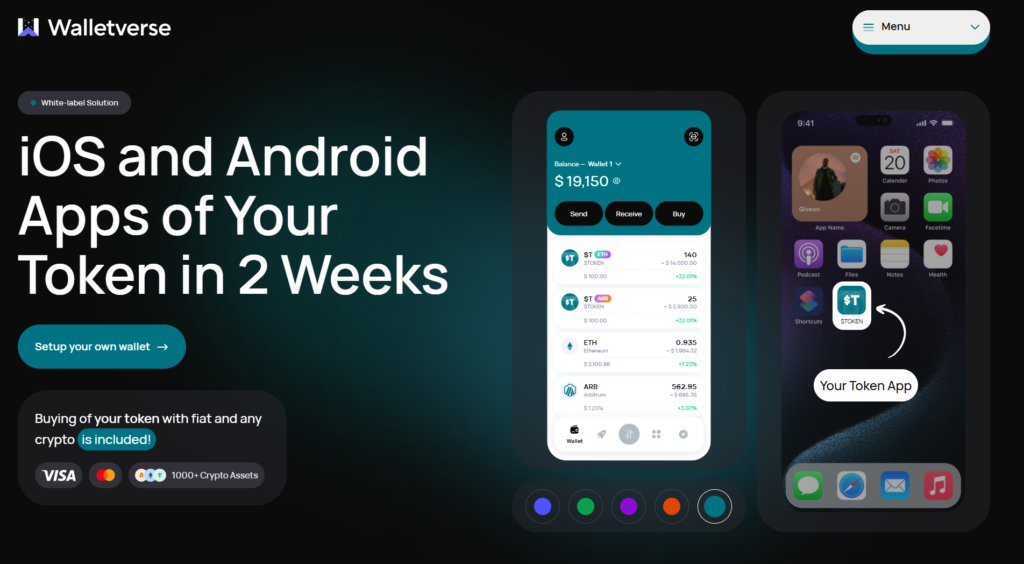
Walletverse is a non-custodial white label mobile crypto wallet designed to support seamless peer-to-business payments. With support for over 1000 cryptocurrencies, Walletverse empowers companies to launch their own branded wallet solutions in just two weeks. It features dApps, NFTs, DeFi tools, biometric login, and passcode protection.
To ensure secure and compliant transactions, Walletverse integrates:
- AML functions
- Advanced encryption with CryptoAES and ECDSA
- OWASP SAST security testing
- Secure storage for 128-bit and 256-bit entropy seed phrases
- Support for BIP32, BIP39, and BIP44 standards
Walletverse also includes fiat on-ramps via Visa, MasterCard, Google Pay, and Apple Pay, making it ideal for businesses targeting hybrid (crypto/fiat) P2B payment systems. With its modular architecture and enterprise-grade features, Walletverse is a reliable choice for brands looking to embrace crypto payments without compromising on security or performance.
Real-World Use Cases of P2B Payments via White Label Wallets
- Online retailers accepting stablecoins for physical and digital products
- Freelancers and consultants using branded wallets to receive client payments
- SaaS platforms offering crypto subscription payments with instant confirmation
- Event organizers and online educators collecting tuition and fees through integrated wallets
These examples demonstrate the flexibility and applicability of white label wallets in a variety of business scenarios.
Steps for Businesses to Enable P2B Payments with White Label Wallets
To implement a secure and scalable P2B payment system, businesses should follow these steps:
- Choose a white label provider with proven crypto infrastructure and payment capabilities.
- Define accepted cryptocurrencies and payment rules (e.g., auto-convert, stablecoin preference).
- Customize UI/UX to match brand identity and optimize user journey.
- Integrate KYC/AML if needed for compliance.
- Deploy, test, and promote the wallet to existing and new customers.
This streamlined process allows rapid deployment without sacrificing functionality or control.
Conclusion: Unlocking New Payment Horizons with White Label Crypto Wallets
Peer-to-business crypto payments are unlocking powerful new opportunities for global commerce. With secure, real-time transactions, lower fees, and greater flexibility, P2B models are gaining ground across industries. White label crypto wallets make this evolution accessible to businesses of all sizes—offering a customizable, secure, and scalable path to crypto adoption. For brands that want to stay ahead of the curve, platforms like Walletverse provide the tools to build the future of payments, today.