

Global supply chains are the backbone of the economy, yet they remain burdened by inefficiencies—paperwork, payment delays, fraud, and limited transparency. As industries seek ways to modernize operations, supply chain tokenization has emerged as a powerful solution. And at the core of this transformation is a user-friendly, secure, and customizable tool: the white label crypto wallet.
With the rise of blockchain in logistics, white label wallets are enabling real-time payments, traceable transactions, and seamless integration of digital assets into supply chain ecosystems.
Understanding Supply Chain Tokenization
Supply chain tokenization involves converting real-world logistics activities and assets into digital tokens on a blockchain. These tokens can represent:
- Raw materials or finished goods;
- Ownership rights or certifications;
- Delivery milestones;
- Payment obligations.
Once tokenized, these elements can be tracked, verified, and exchanged transparently across supply chain actors—manufacturers, shippers, warehouses, and retailers.
For example, a token can be issued when a shipment leaves the factory, updated as it passes checkpoints, and automatically triggers payment when it arrives at the destination. This drastically reduces disputes and delays.
Why Traditional Supply Chains Are Ripe for Disruption
Despite technological advances, most global supply chains still face:
- Manual paperwork and siloed databases;
- Slow invoice processing and cross-border payment issues;
- Counterfeit goods and unverifiable origin claims;
- Disparate systems that lack end-to-end visibility.
These inefficiencies drive up costs, create delays, and erode trust between stakeholders.
How White Label Crypto Wallets Enable Blockchain-Powered Supply Chains
White label crypto wallets offer businesses a customizable and ready-to-deploy solution to interact with blockchain-based supply chain systems. Instead of building infrastructure from scratch, companies can launch a fully branded wallet for vendors, drivers, and partners with all necessary features included.
Key capabilities include:
- Real-time payments via stablecoins or utility tokens, reducing bank dependency;
- Smart contract automation for milestone-based payouts and escrow releases;
- Token scanning to verify shipment authenticity at each checkpoint;
- Audit trails for regulatory compliance and stakeholder transparency.
White label wallets serve as the trusted interface between human users and blockchain infrastructure, making tokenized supply chain models practical at scale.
Key Features of Supply Chain-Oriented White Label Wallets
To effectively serve logistics environments, a white label wallet must include:
- Multi-token compatibility for utility, governance, and asset-backed tokens;
- QR code scanning to authenticate goods and validate token ownership;
- User permission management for enterprise-grade access control;
- Custom branding to align with the supply chain operator’s identity;
- Integration options with logistics platforms, ERP systems, or dApps.
These features ensure usability across complex, multi-party workflows while maintaining security and compliance.
Real-World Use Cases Across Industries
Agriculture:
Track produce from farm to table, ensuring organic certifications and paying farmers automatically upon delivery confirmation.
Pharmaceuticals:
Verify cold chain compliance and authenticate medicines through batch-level tokenization—essential for public safety and anti-counterfeiting.
Luxury Goods:
Enable proof-of-origin and anti-fraud protection with NFT-like tokens tied to high-value items like watches, handbags, or artwork.
Global Freight & Shipping:
Tokenize containers and shipping milestones, releasing payment to transport providers once delivery is verified—automating escrow and reducing disputes.
Walletverse: A Ready-to-Use White Label Wallet for Supply Chain Ecosystems
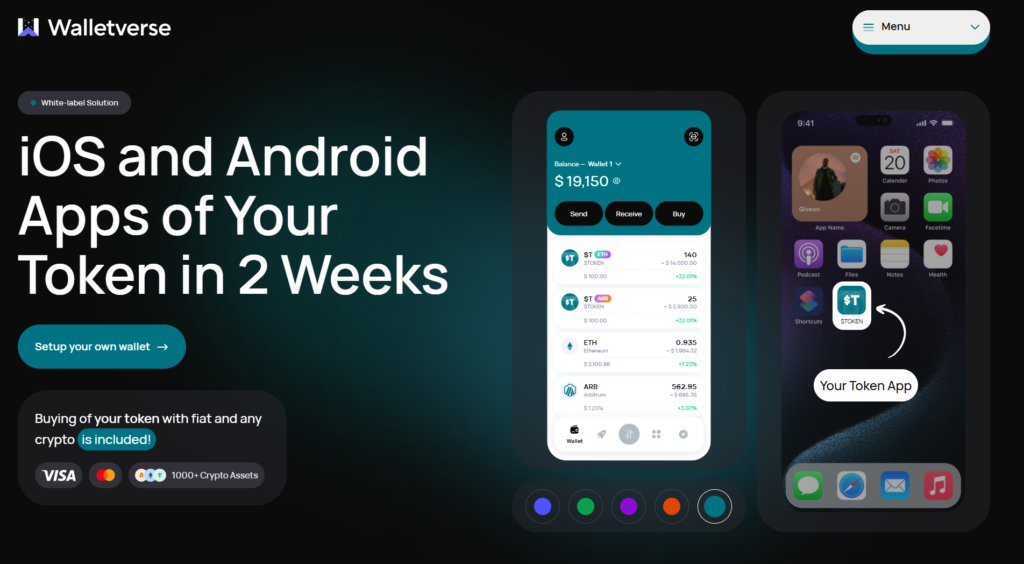
For businesses looking to adopt tokenized logistics without reinventing the wheel, Walletverse provides a powerful, mobile-ready white label wallet solution.
Key features include:
- Support for stablecoins and supply chain tokens;
- Multi-account setup for partners, vendors, and field workers;
- QR-based tracking and scanning tools;
- dApp compatibility for integration with logistics smart contracts;
- Fiat on-ramp support via Apple Pay, Google Pay, and bank cards;
- Biometric login and high-grade encryption for security and compliance.
Walletverse helps enterprises digitize and streamline operations while maintaining full control over branding and user experience.
Implementation Considerations for Enterprises
Before rolling out a white label wallet in a supply chain environment, companies should:
- Define their tokenization strategy and how it aligns with business logic;
- Set up and audit smart contracts for payment automation;
- Integrate wallets with existing ERP, WMS, or SCM platforms;
- Establish role-based access and permission models for different actors;
- Ensure cross-border compliance, including KYC/AML where applicable.
Partnering with a development company experienced in supply chain tokenization and wallet deployment can accelerate implementation and minimize risks.
Tokenization is redefining supply chains by introducing transparency, automation, and speed. White label crypto wallets are the key to unlocking these benefits without requiring businesses to build from the ground up. They bridge the gap between complex blockchain systems and real-world logistics, enabling traceability, accountability, and real-time payments across borders.
Whether you’re in agriculture, pharma, shipping, or luxury goods, adopting a branded crypto wallet tailored for your ecosystem could be the competitive advantage your supply chain needs. The future of logistics is digital—and it’s already here.