

In the digital economy, micropayments—small financial transactions typically worth just a few cents or dollars—are becoming increasingly important. Whether for digital content, in-game purchases, or charitable donations, micropayments have the potential to revolutionize how businesses and consumers engage with digital goods and services. However, traditional payment systems are not always equipped to handle these low-value transactions efficiently. The high transaction fees and slow processing times make micropayments a challenge. White label crypto wallets are emerging as the key solution to enable cost-effective and fast micropayments in the digital economy. These customizable wallets offer businesses the ability to provide seamless, secure, and inexpensive payment solutions while enhancing the overall user experience.
What are Micropayments and Why Are They Important?
Micropayments are small-value transactions, usually ranging from a few cents to a few dollars, that allow customers to make quick purchases without the need for significant monetary commitment. Micropayments have gained traction in various sectors, including:
- Digital content. Payment for individual articles, videos, or music tracks.
- Gaming. Small in-game purchases for items like skins, currency, or upgrades.
- Online services. Accessing features or paying for temporary use of a service, such as pay-per-view video or cloud storage.
- Charitable donations. Small, recurring donations made by users to support causes or organizations.
However, micropayments face significant barriers when processed using traditional payment methods, which often come with high fees, slow processing times, and limited scalability. These hurdles have created a need for alternative solutions, and white label crypto wallets are helping businesses address these challenges.
The Role of White Label Crypto Wallets in Enabling Micropayments
White label crypto wallets are pre-built, customizable wallet solutions developed by third-party providers that businesses can brand and launch as their own. These wallets support cryptocurrencies, allowing businesses to offer fast, secure, and low-cost payments to their customers. Key features of white label crypto wallets that enable micropayments include:
- Low transaction fees. By eliminating intermediaries, blockchain technology reduces transaction fees, making it feasible to process small-value payments.
- Fast transactions. Blockchain transactions are processed almost instantly, allowing businesses to offer real-time micropayments to customers without the delays associated with traditional systems.
- Multi-currency support. White label wallets support a wide variety of cryptocurrencies, including stablecoins, enabling businesses to offer flexible payment options to customers around the world.
- Customization. Businesses can tailor the wallet’s appearance and functionality to their brand and user needs, creating a seamless customer experience for micropayment transactions.
These features make white label crypto wallets an ideal solution for businesses that want to enable micropayments in the digital economy.
How White Label Crypto Wallets Address Micropayment Challenges
White label crypto wallets help businesses overcome the barriers associated with traditional payment systems, especially when it comes to small transactions:
- Eliminating high transaction fees. Traditional payment systems often charge significant fees for processing small payments, making micropayments impractical. By using blockchain technology, white label crypto wallets enable direct peer-to-peer transactions, bypassing intermediaries and significantly lowering transaction fees.
- Instant payment processing. Blockchain technology allows for nearly instantaneous payments. Unlike traditional systems that can take days to process cross-border payments or micropayments, blockchain transactions are processed in minutes or even seconds, providing a seamless experience for users.
- Global accessibility. White label crypto wallets allow businesses to accept payments in multiple cryptocurrencies, making it easier to facilitate micropayments across borders without dealing with complex currency conversions or banking systems. This global accessibility ensures that users from different regions can participate in the digital economy.
- Automated payments. White label wallets can be configured to handle recurring micropayments, making it easy for businesses to offer subscription models, pay-per-use services, or automated donations. This reduces administrative overhead and ensures a hassle-free experience for customers.
White Label Crypto Wallet: Walletverse
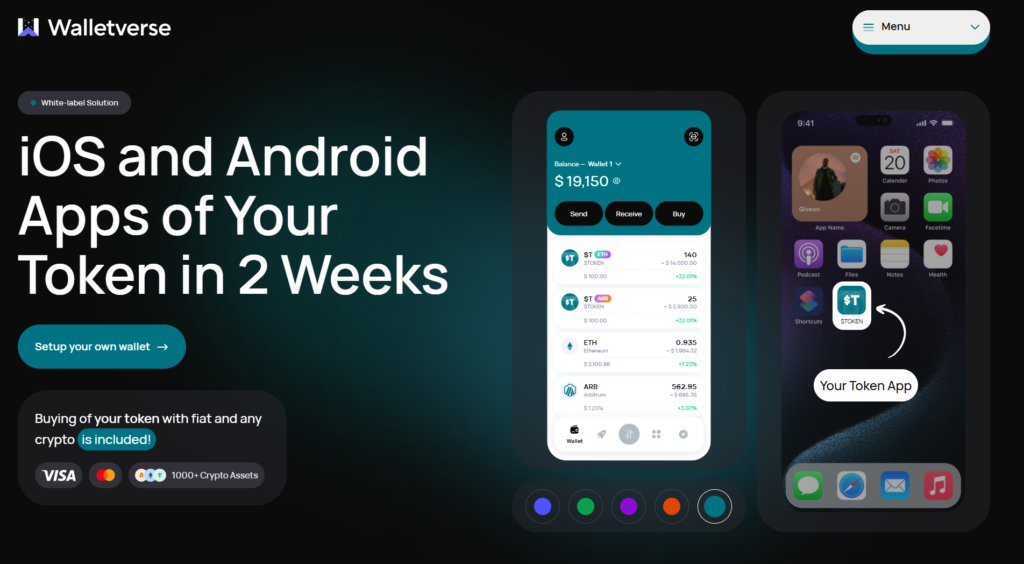
An excellent example of a white label crypto wallet solution is Walletverse. This non-custodial mobile cryptocurrency wallet solution can be fully branded and customized for businesses in just two weeks. Walletverse supports over 1000 cryptocurrencies, providing users with a wide range of digital assets for micropayments.
With Walletverse, businesses can offer seamless cryptocurrency transactions at low cost, thanks to its low transaction fees and fast payment processing. Integrated with payment systems like Visa, MasterCard, Google Pay, and Apple Pay, Walletverse bridges the gap between traditional and digital currencies, making micropayments accessible for a global audience.
Walletverse also ensures robust security, with features like biometric protection, advanced encryption, and compliance with AML standards. Its customization options make it the perfect solution for businesses looking to integrate micropayment models into their operations while providing a secure and personalized experience for users.
Key Benefits of White Label Crypto Wallets for Micropayments
- Cost-effective transactions. With white label wallets, both businesses and customers can benefit from low transaction fees. This makes micropayments viable for businesses, enabling them to monetize small-value transactions without losing money to excessive fees.
- Enhanced user experience. The ability to make fast, secure payments enhances the customer experience. Users can make purchases, access content, or donate to causes quickly and easily, without the frustrations typically associated with traditional payment systems.
- Scalability. As businesses grow, so does the volume of micropayments. White label crypto wallets are scalable solutions, meaning they can handle a high volume of transactions efficiently, which is critical for businesses expecting to process thousands or millions of micropayments.
- Revenue stream diversification. By enabling micropayments, businesses can tap into new revenue streams, such as pay-per-view models, digital content monetization, in-game purchases, and micro-donations. This broadens their monetization strategies and opens up new opportunities.
Real-World Examples of Micropayments in Action
- Content platforms. News websites, blogs, and streaming platforms are increasingly adopting micropayment models, allowing users to pay small amounts for individual articles, videos, or music tracks. White label crypto wallets streamline these transactions, making it easy for users to pay without dealing with high fees or waiting for processing.
- Gaming. The gaming industry has seen a rapid rise in micropayments for in-game purchases, such as digital items, skins, or credits. White label crypto wallets enable gamers to make fast, secure transactions, ensuring a smooth experience when purchasing virtual goods.
- Charitable donations. White label wallets allow users to make small, recurring donations to their favorite causes or charities, encouraging ongoing support. By reducing transaction fees and making it easier to donate, these wallets are helping to grow micro-donation models.
- Subscription-based services. Businesses offering subscription-based services, such as access to individual pieces of content or temporary access to services, can easily integrate micropayments with white label wallets. This ensures users can access what they want quickly and at an affordable price.
How White Label Crypto Wallets Support Digital Economy Growth
- Monetizing digital content. White label crypto wallets are enabling businesses to monetize digital content in new ways, allowing creators and companies to generate revenue from small, individual transactions, rather than relying on ad-based models or large payments.
- Empowering the gig economy. In the gig economy, workers often perform services on a small-scale, task-by-task basis. White label wallets facilitate micropayments by allowing businesses to pay freelancers instantly and at low cost, enhancing the efficiency of gig platforms.
- Support for DeFi and NFTs. Decentralized finance (DeFi) and non-fungible tokens (NFTs) are rapidly growing sectors in the digital economy. White label crypto wallets are essential for enabling fast and secure micropayments in these areas, whether for staking rewards, trading tokens, or purchasing digital assets.
Challenges and Solutions in Implementing Micropayments with White Label Crypto Wallets
- Scalability. High transaction volumes can sometimes cause blockchain networks to slow down, affecting the speed of micropayments. Discuss how businesses can choose blockchain platforms that offer higher throughput or utilize Layer 2 solutions to enhance scalability.
- User education. While cryptocurrencies are becoming more mainstream, many customers may still be unfamiliar with them. Explain how businesses can educate their users about how to use white label wallets for micropayments, ensuring that users feel confident in making small transactions.
- Regulatory compliance. Regulatory concerns surrounding cryptocurrency are evolving. White label wallets can help businesses meet compliance requirements, such as KYC (Know Your Customer) and AML (Anti-Money Laundering), to ensure that micropayment systems are legal and secure.
The Future of Micropayments with White Label Crypto Wallets
- Expanding to new industries. As more businesses explore micropayment models, white label crypto wallets will continue to drive innovation across industries like digital media, entertainment, gaming, and charitable donations.
- Advancements in blockchain. With the continued development of blockchain technology, transaction costs and speed will only improve, making micropayments even more efficient. New protocols and blockchain networks will provide better scalability and faster transaction processing.
- Tokenization of real-world assets. As tokenized real-world assets become more prevalent, white label wallets will play a critical role in managing microtransactions related to tokenized property, stocks, or commodities, allowing for fractional ownership and small-scale investments.
Micropayments are crucial for the modern digital economy, and white label crypto wallets are making it possible to process these small transactions efficiently, securely, and at a low cost. By reducing transaction fees, enhancing speed, and offering scalability, white label wallets empower businesses to tap into new revenue models and provide better customer experiences. As the digital economy continues to grow, embracing micropayments through white label crypto wallets will help businesses stay competitive, meet consumer demands, and unlock new opportunities for growth.