

In today’s digital economy, customer loyalty is a crucial element for businesses across industries. Traditional loyalty programs—based on points, stamps, or membership levels—have been a staple for years, but they are often limited by issues such as high operating costs, low customer engagement, and a lack of flexibility. Blockchain-based loyalty programs, however, are emerging as a transformative solution that can overcome these challenges. With the help of white label crypto wallets, businesses can offer secure, transparent, and personalized loyalty programs that not only enhance customer engagement but also unlock new revenue streams.
Understanding Blockchain-Based Loyalty Programs
A blockchain-based loyalty program uses distributed ledger technology to manage and track customer rewards in a secure and transparent manner. Unlike traditional systems, blockchain allows businesses to issue and store loyalty points, or tokens, that are fully digital, transferrable, and immune to fraud. Customers can easily redeem these rewards across platforms and services, creating a more dynamic and valuable loyalty system.
Benefits Over Traditional Loyalty Programs:
- Security and transparency. Blockchain’s immutable ledger ensures that loyalty points are accurate, secure, and cannot be manipulated.
- Low operational costs. By eliminating intermediaries, businesses can save on the costs associated with processing rewards and managing loyalty systems.
- Global redemption. Tokens can be redeemed universally, allowing customers to use their loyalty rewards in a wider range of environments and on different platforms.
What is a White Label Crypto Wallet?
A white label crypto wallet is a customizable digital wallet solution provided by third-party developers, which businesses can brand and offer to their customers. These wallets enable secure management of cryptocurrencies and tokens, allowing businesses to build their own branded wallet experience without having to develop the infrastructure themselves. White label crypto wallets offer a wide range of features, such as multi-currency support, secure storage, fast transactions, and more.
Key Features of White Label Crypto Wallets:
- Multi-currency support. Enables businesses to manage multiple cryptocurrencies and tokens, providing flexibility to reward customers with different types of digital assets.
- Security. Advanced encryption protocols, biometric authentication, and multi-signature features ensure that users’ rewards and assets are secure.
- Customization. White label solutions allow businesses to integrate their branding, create custom user interfaces, and offer personalized features tailored to their target audience.
- Blockchain integration. These wallets can be integrated with blockchain networks, allowing businesses to issue, track, and manage loyalty tokens seamlessly.
For businesses, white label crypto wallets provide an efficient and cost-effective way to launch blockchain-based loyalty programs.
The Role of White Label Crypto Wallets in Facilitating Blockchain-Based Loyalty Programs
White label crypto wallets are playing an essential role in enabling businesses to create and manage blockchain-based loyalty programs. Here’s how they make it possible:
- Seamless token management. White label wallets allow businesses to issue and store loyalty tokens on the blockchain. Customers can store their tokens in the wallet, track rewards, and easily redeem them for products, services, or even crypto assets.
- Real-time reward tracking. Blockchain’s transparent nature enables real-time tracking of rewards. Customers can instantly check their loyalty token balance, view transaction history, and redeem rewards at any time, enhancing user satisfaction.
- User-friendly interface. White label wallets are designed to provide an intuitive, easy-to-use experience for customers. This makes it easy for businesses to onboard new users to their loyalty programs, as customers don’t need to have a deep understanding of cryptocurrency or blockchain technology.
- Cross-platform integration. Loyalty tokens issued through white label crypto wallets can be redeemed across multiple platforms, services, and even with third-party partners. This gives businesses the flexibility to create expansive loyalty ecosystems where customers can use their tokens in a variety of ways.
Benefits of Using White Label Crypto Wallets for Blockchain-Based Loyalty Programs
- Cost efficiency. Blockchain-based loyalty programs reduce operational costs by eliminating intermediaries and minimizing the need for third-party loyalty platforms. White label crypto wallets also reduce infrastructure expenses, as businesses do not need to build complex wallets from scratch.
- Improved customer experience. By integrating blockchain-based loyalty systems into a white label wallet, businesses can offer a seamless and engaging customer experience. Customers enjoy the flexibility to access, track, and redeem their rewards in real-time, which increases satisfaction and retention.
- Scalability. Blockchain systems are highly scalable, making it easy for businesses to grow their loyalty programs as their customer base expands. White label crypto wallets can handle large volumes of transactions, ensuring smooth operations even as demand increases.
- Global reach. Since cryptocurrencies and blockchain are inherently borderless, businesses can offer global loyalty programs that customers can access from anywhere in the world. This is especially useful for businesses with international customers, as blockchain eliminates the need for complex currency conversions and fees.
- Security and trust. Blockchain’s inherent security features protect both customers and businesses. The immutability of the ledger means that loyalty points cannot be forged or manipulated, ensuring the integrity of the program. This builds trust with customers, who know that their rewards are safe and genuine.
White Label Crypto Wallet: Walletverse
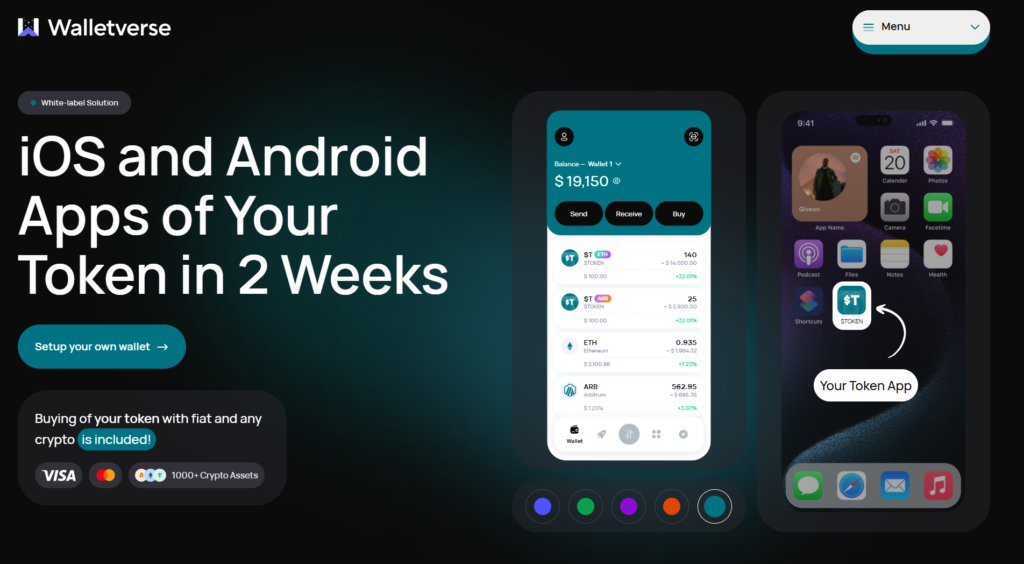
One excellent example of a white label crypto wallet solution for businesses looking to enable blockchain-based loyalty programs is Walletverse. This non-custodial mobile cryptocurrency wallet can be customized and launched within two weeks, offering businesses the flexibility to integrate and brand it with their own identity.
Walletverse supports over 1000 cryptocurrencies, including stablecoins and NFTs, which can be used as part of loyalty programs. It also includes robust security features such as biometric protection and advanced encryption standards (CryptoAES, ECDSA) to ensure the safety of both user data and loyalty rewards.
With Walletverse, businesses can offer seamless and secure loyalty rewards programs to customers, while also complying with AML regulations and supporting multiple payment options like Visa, MasterCard, Google Pay, and Apple Pay. This makes Walletverse the ideal solution for businesses seeking to integrate blockchain-based loyalty systems with ease and efficiency.
Case Studies: Real-World Examples of Blockchain-Based Loyalty Programs Powered by White Label Crypto Wallets
- E-commerce. Many e-commerce businesses are using blockchain to offer crypto-based loyalty rewards. For example, online stores may offer customers the option to earn cryptocurrency or tokens for every purchase made. White label wallets enable users to track and redeem these rewards seamlessly, creating an engaging shopping experience.
- Travel and hospitality. Airlines, hotels, and travel agencies are increasingly adopting blockchain-based loyalty systems to reward customers with loyalty points that can be redeemed for services such as flights, hotel stays, or experiences. White label crypto wallets make it easy for customers to manage these tokens and use them globally.
- Gaming. The gaming industry is leveraging blockchain to create unique, token-based rewards systems. Players can earn in-game items, skins, or virtual currency through their participation. White label crypto wallets allow gamers to store and use these rewards securely and easily.
- Retail. Major retailers are exploring blockchain to offer loyalty rewards that can be used across different stores or platforms. White label crypto wallets facilitate this interoperability, allowing customers to use their tokens for purchases in various online and offline stores.
How White Label Crypto Wallets Enhance Customer Engagement in Loyalty Programs
- Personalized rewards. White label wallets allow businesses to personalize loyalty rewards based on customer behavior, preferences, and purchase history. By offering tailored rewards, businesses can increase engagement and satisfaction.
- Gamification. Blockchain-based loyalty programs integrated with white label wallets can incorporate gamification features such as badges, levels, and challenges. Customers are rewarded with loyalty tokens for achieving milestones, which encourages continued engagement.
- Referral programs. Businesses can integrate referral programs within white label crypto wallets, allowing customers to earn loyalty tokens by referring friends or family to the service. This incentivizes users to promote the brand, helping businesses grow their customer base.
Overcoming Challenges in Implementing Blockchain-Based Loyalty Programs with White Label Wallets
- Regulatory compliance. Navigating the regulatory landscape around blockchain and cryptocurrencies can be complex. White label wallet solutions that are compliant with local regulations (AML, KYC, etc.) ensure that businesses can implement blockchain-based loyalty programs without facing legal issues.
- User education. Many users are still unfamiliar with blockchain and cryptocurrency. Businesses will need to provide educational resources and simple interfaces to ensure that customers understand how to use their white label crypto wallets effectively.
- Integration with existing systems. Businesses may already have traditional loyalty systems in place. Integrating blockchain-based loyalty programs through white label wallets requires seamless integration with these existing systems to ensure a smooth transition.
The Future of Blockchain-Based Loyalty Programs
- Integration with DeFi. As decentralized finance (DeFi) platforms continue to grow, blockchain-based loyalty programs powered by white label wallets may allow businesses to offer interest-bearing rewards or staking opportunities, further incentivizing customer participation.
- NFT-based loyalty rewards. Non-fungible tokens (NFTs) offer unique opportunities for loyalty programs. Businesses may issue NFTs as part of their loyalty program, allowing customers to own rare digital assets as part of their rewards.
- Greater interoperability. The future of loyalty programs will likely see greater interoperability between different blockchain networks and businesses. White label crypto wallets will be crucial in facilitating cross-platform and cross-industry redemption of loyalty tokens.
White label crypto wallets are playing a pivotal role in the rise of blockchain-based loyalty programs by providing businesses with secure, scalable, and customizable solutions to engage and retain customers. By reducing operational costs, enhancing customer experiences, and offering global and transparent reward systems, businesses can create innovative loyalty programs that increase customer satisfaction and loyalty. As blockchain technology continues to evolve, white label wallets will remain essential for businesses looking to stay competitive in the digital economy.