

The world of finance is undergoing a major transformation, and one of the most anticipated changes is the rise of Central Bank Digital Currencies (CBDCs). With central banks around the globe exploring the potential of digital currencies, CBDCs have the power to reshape the financial landscape, offering a digital version of traditional fiat currencies. As governments move forward with their CBDC plans, one key enabler of their success will be white label crypto wallets. These wallets offer a secure, user-friendly, and scalable solution for managing CBDCs, making them an essential component of the digital financial ecosystem.
In this article, we explore how white label crypto wallets are poised to facilitate the adoption and use of CBDCs, offering a future-proof solution for businesses, financial institutions, and governments looking to integrate digital currencies into their operations.
What are Central Bank Digital Currencies (CBDCs)?
CBDCs are digital currencies issued and regulated by central banks. Unlike cryptocurrencies, which are decentralized and not controlled by any authority, CBDCs are government-backed digital assets that represent the digital form of a country’s fiat currency.
Types of CBDCs:
- Wholesale CBDCs. These are primarily intended for interbank transactions, improving the efficiency of payment systems between financial institutions.
- Retail CBDCs. These are designed for everyday consumers and businesses to use for transactions. Retail CBDCs would enable digital payments, reduce transaction costs, and improve financial inclusion.
The growing interest in CBDCs is driven by the need for faster, more efficient payment systems, as well as concerns over the rise of decentralized cryptocurrencies and the ability to maintain monetary control. Central banks are looking to use CBDCs to modernize the financial infrastructure, enhance payment system stability, and increase access to financial services.
The Role of White Label Crypto Wallets in CBDC Adoption
White label crypto wallets are pre-built wallet solutions provided by third-party companies that businesses can customize and brand as their own. These wallets allow users to store, send, and receive cryptocurrencies and digital assets securely. In the context of CBDCs, these wallets are an ideal solution for central banks, financial institutions, and fintech companies looking to offer users easy access to their digital currencies.
Why White Label Wallets Are Key for CBDC Adoption:
- Scalability. White label wallets can be easily scaled to handle the increasing volume of CBDC transactions.
- Customization. These wallets can be customized to meet the specific needs of central banks or financial institutions, from branding to user interface design, making them an ideal solution for CBDC integration.
- User accessibility. White label wallets provide a user-friendly interface, enabling individuals and businesses to interact with CBDCs easily, regardless of their technical knowledge.
- Security. With built-in security features such as biometric protection, encryption, and multi-signature transactions, these wallets ensure that CBDCs are stored and transacted securely.
Key Benefits of White Label Crypto Wallets for CBDCs
- Instant transactions. White label crypto wallets use blockchain technology, enabling instant transactions with CBDCs. Users can send and receive funds in real-time, without the delays associated with traditional banking systems.
- Low transaction fees. Traditional banking systems and payment processors often impose high fees, especially for international transfers. White label crypto wallets, by leveraging blockchain, significantly reduce transaction costs, making CBDCs more affordable for both users and businesses.
- Global reach. One of the biggest advantages of CBDCs is their ability to enable cross-border payments. White label crypto wallets can facilitate these global payments, reducing the complexities and costs traditionally associated with international transactions.
- Enhanced security. With features like multi-factor authentication, biometric security, and advanced encryption, white label crypto wallets ensure that users’ CBDC holdings are securely managed, preventing fraud and hacking.
- Regulatory compliance. Financial institutions using white label wallets for CBDCs can embed AML (Anti-Money Laundering) and KYC (Know Your Customer) checks directly into the wallet, ensuring compliance with global regulations. This helps central banks maintain control and oversight over the digital currency ecosystem.
How White Label Crypto Wallets Enable CBDC Adoption for Central Banks and Financial Institutions
- Integration with existing infrastructure. Financial institutions and central banks can integrate white label wallets with their existing systems, enabling seamless access to CBDCs for users. This minimizes the disruption to current payment systems and facilitates the smooth rollout of CBDCs to the public.
- User engagement and education. By offering a white label wallet solution, financial institutions can educate users on how to manage and spend their CBDCs. These wallets can include features like tutorials, help guides, and customer support, which help users become familiar with using digital currencies.
- Real-time analytics and insights. White label crypto wallets can provide businesses with real-time insights into user behavior and CBDC transactions, allowing central banks and financial institutions to adapt to evolving market needs, monitor the effectiveness of CBDC adoption, and make data-driven decisions.
- Wallet customization. White label wallets can be tailored to meet the specific needs of different jurisdictions or market segments, from adding features like automatic currency conversion for international CBDC transfers to integrating national loyalty programs that use CBDCs as rewards.
White Label Crypto Wallet: Walletverse
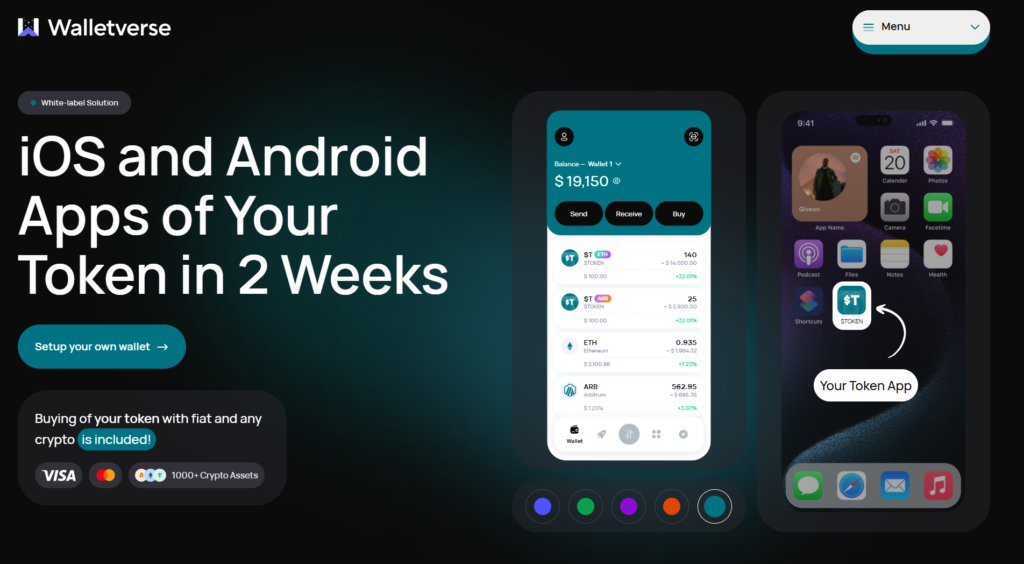
- An ideal example of a white label crypto wallet for CBDC management is Walletverse. This non-custodial mobile wallet solution allows businesses and governments to launch branded wallets in just two weeks, offering full support for CBDCs alongside other digital currencies. Walletverse integrates robust security features, including biometric protection, multi-signature capabilities, and advanced encryption, ensuring the safety of CBDC transactions. Additionally, Walletverse is designed for scalability, making it an ideal solution for the widespread adoption of CBDCs.
- Walletverse’s ease of integration with various payment systems like Visa, MasterCard, Apple Pay, and Google Pay allows users to seamlessly interact with CBDCs, enhancing the user experience and driving adoption. For central banks and financial institutions, Walletverse provides a flexible, secure, and future-proof solution for the implementation and management of CBDCs.
How White Label Crypto Wallets Improve Financial Inclusion with CBDCs
- Access for the unbanked. White label wallets can provide access to CBDCs for those without traditional bank accounts, particularly in developing regions. This is especially important for promoting financial inclusion, allowing individuals to participate in the digital economy, even without access to banking infrastructure.
- Mobile-first access. Since white label crypto wallets are typically mobile-friendly, users can access and manage their CBDCs from smartphones, offering an easy solution for users in remote or underserved regions.
- Lower transaction costs. By reducing transaction fees, white label wallets enable lower-cost cross-border payments, benefiting individuals and businesses in developing countries who rely on remittances as a primary income source.
Addressing Challenges in Implementing White Label Wallets for CBDCs
- Regulatory compliance. Adhering to local and global regulations surrounding CBDCs and cryptocurrencies can be challenging. White label wallets need to include built-in compliance features to meet AML (Anti-Money Laundering), KYC (Know Your Customer), and privacy regulations.
- User education. There is a learning curve when it comes to digital currencies. White label wallet providers must offer user-friendly interfaces, help guides, and support systems to ensure users understand how to use CBDCs.
- Scalability. The successful rollout of CBDCs requires scalable wallet solutions that can handle large volumes of transactions as adoption increases. White label wallets are scalable, meaning they can easily expand to accommodate increasing transaction volumes without performance issues.
The Future of CBDCs and White Label Crypto Wallets
- Enhanced user experiences. As CBDC adoption grows, white label crypto wallets will continue to enhance user experiences through AI-powered personalization, real-time transaction tracking, and other features designed to streamline the use of digital currencies.
- Cross-chain interoperability. Future versions of white label wallets may offer cross-chain interoperability, enabling users to manage multiple CBDCs from different countries and integrate them seamlessly into other digital financial ecosystems.
- Integration with DeFi. As decentralized finance (DeFi) platforms gain traction, white label wallets will likely support the use of CBDCs within these platforms, allowing users to participate in decentralized lending, borrowing, and trading using their CBDC holdings.
White label crypto wallets are essential tools for the successful implementation and adoption of Central Bank Digital Currencies (CBDCs). By offering a secure, scalable, and user-friendly solution, these wallets make it easier for financial institutions, businesses, and governments to distribute and manage CBDCs while improving user engagement and trust. With the continued development of CBDCs around the world, white label wallets are set to play a pivotal role in the future of digital finance.