

In the expanding universe of blockchain technology, Decentralized Finance (DeFi) has emerged as one of the most transformative sectors, reshaping how financial services are accessed and delivered globally. White label crypto wallets are becoming instrumental in bridging traditional financial systems with the innovative world of DeFi, providing businesses with a platform to engage with this burgeoning ecosystem. This article explores how white label crypto wallets serve as a gateway to DeFi, offering users seamless access to decentralized services and enhancing business opportunities in the digital finance landscape.
Facilitating Access to DeFi Platforms
White label crypto wallets offer an accessible entry point for users and businesses to explore the diverse functionalities of DeFi. These wallets provide the infrastructure to interact with DeFi applications directly, enabling users to participate in lending, borrowing, staking, and trading without traditional banking intermediaries. By integrating these capabilities, white label wallets empower users with the tools to manage their financial activities in a decentralized and autonomous manner.
Streamlining User Experience
Integrating DeFi services within white label crypto wallets significantly streamlines the user experience. Businesses can customize these wallets to offer intuitive interfaces that simplify the complexity of DeFi transactions. Features such as direct interaction with smart contracts, automated yield farming strategies, and real-time token swapping are embedded within the wallet, making DeFi more accessible to a broader audience, including those new to blockchain technology.
Enhancing Security and Sovereignty
Security is paramount in DeFi, where users are entirely responsible for their assets. White label crypto wallets address this by incorporating advanced security measures like biometric authentication, multi-factor authentication, and hardware security modules (HSMs) to safeguard users’ private keys and assets. Additionally, these wallets support non-custodial solutions, giving users complete control over their funds and reducing the risk associated with centralized breaches.
Customization and Scalability
Businesses utilizing white label crypto wallets can leverage their scalability and customization capabilities to tailor services to market demands. Whether adding support for new tokens, integrating additional DeFi platforms, or updating wallet features to enhance user engagement, the adaptability of white label solutions enables businesses to stay competitive and relevant in the fast-evolving DeFi sector.
Case Study: Walletverse’s DeFi Integration
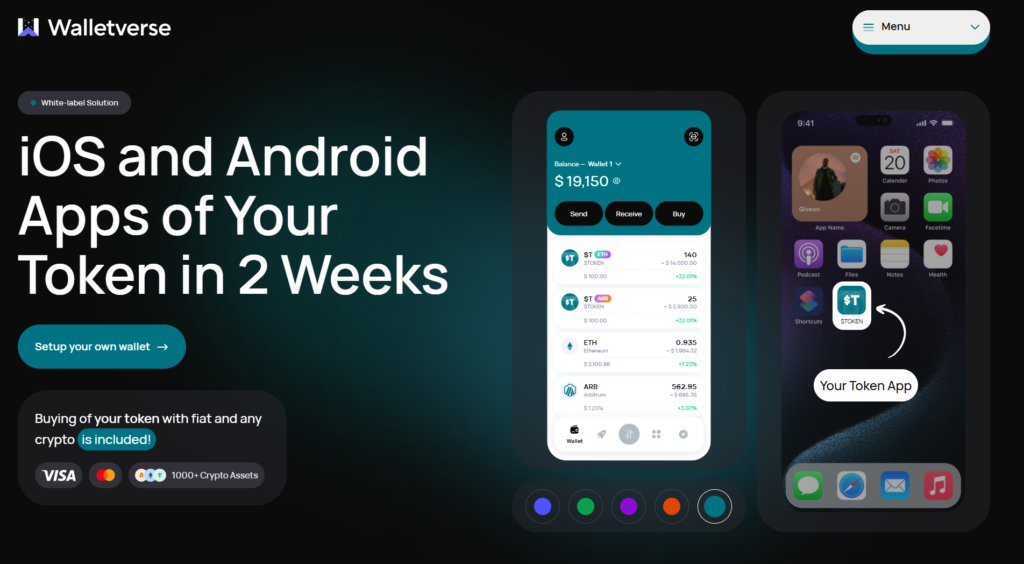
A prime example of effective DeFi integration in a white label wallet is Walletverse. This platform supports over 1000 cryptocurrencies and provides seamless access to multiple DeFi applications. Walletverse users can easily connect to various DeFi platforms for lending or trading, engage in staking to earn rewards and participate in governance protocols directly through the wallet. Integrating these features within a secure, branded environment helps businesses attract and retain a diverse user base keen on exploring decentralized finance.
Conclusion
White label crypto wallets are pivotal in democratizing access to decentralized finance, breaking down barriers that traditionally hindered entry into the financial sector. By providing robust, customizable, and user-friendly platforms, these wallets are enhancing the user experience and fostering innovation and inclusivity in financial services. As DeFi continues to grow, the strategic importance of white label crypto wallets as facilitators of this revolution becomes increasingly apparent, offering promising opportunities for businesses looking to venture into the future of finance.