

As businesses increasingly look for ways to integrate blockchain technology into their operations, white-label wallet infrastructure offers a faster path to market. A ready-made crypto wallet solution allows companies to launch a branded digital wallet without the complexity, cost, and time required for in-house development.
Walletverse provides customizable crypto wallet solutions for businesses that want to offer secure digital asset management under their own brand. This approach can be useful for fintech firms, exchanges, e-commerce platforms, Web3 projects, and companies that want to expand into crypto services with a ready-to-deploy product foundation.
This article was prepared by ilink, a software and blockchain technology developer with 14 years of experience in the fintech industry.
What Is Walletverse?
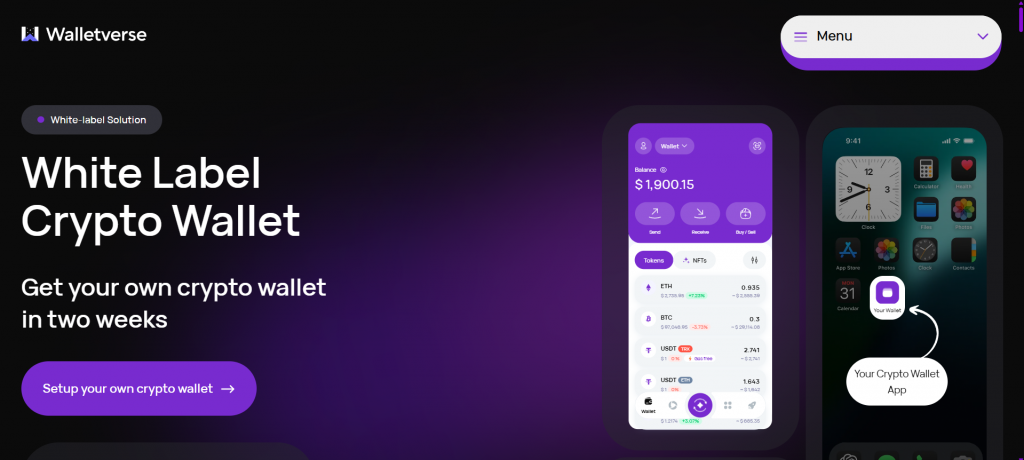
Walletverse is a provider of white-label cryptocurrency wallet solutions that enable businesses to launch secure and feature-rich digital asset management platforms. The product is designed for companies that want to offer users a branded wallet experience without building the entire technical infrastructure from scratch.
As a white label development company, Walletverse helps businesses deploy ready-made wallet products that can be adapted to specific branding, functionality, security, and operational needs. This makes it suitable for fintech companies, crypto exchanges, e-commerce platforms, investment services, and other businesses entering the digital asset market.
A white label crypto wallet like Walletverse can support core wallet functionality, including asset storage, transactions, user account access, and security features. Depending on the business model, it can also support broader Web3 functionality, payment integrations, tokenized assets, and other digital finance services.
Why Choose Walletverse for White-Label Development?
Walletverse is designed for businesses that need a scalable and customizable crypto wallet product with a shorter path to launch. It allows companies to focus on market entry, customer experience, and growth while relying on an existing wallet infrastructure.
Key reasons include:
- Expertise in blockchain and fintech. Walletverse is built around blockchain and fintech functionality, helping businesses access wallet infrastructure designed for digital asset services;
- Customizable and scalable solutions. Businesses can personalize the wallet’s interface, functionality, and security features to create a more relevant user experience;
- Rapid market deployment. Walletverse allows companies to launch branded wallet solutions faster by reducing the need for long development cycles;
- Security and compliance. The solution can include encryption, multi-signature authentication, and KYC/AML-related features to support safer wallet operations and regulatory readiness;
- Business-focused flexibility. Companies can adapt the product to different use cases, including crypto exchanges, payment services, investment platforms, and Web3 applications.
This makes Walletverse a practical white label wallet solution for companies that want to enter the crypto market with a ready-made product while still keeping control over brand presentation and user experience.
Key Offerings of Walletverse
Walletverse provides a set of white-label wallet and blockchain-related solutions for businesses that want to integrate digital assets into their platforms. These offerings are designed to support secure asset management, transactions, payments, and tokenized asset use cases.
White-Label Crypto Wallet Development
Walletverse supports white label crypto wallet development for companies that want to launch their own branded wallet product. The solution can be adapted to different business models, from fintech apps and crypto exchanges to Web3 platforms and investment services.
Core wallet features may include:
- Multi-currency support. The wallet can support Bitcoin, Ethereum, and a wide range of altcoins and tokens;
- Secure storage. The product can include private key management and security layers for protecting digital assets;
- User-friendly interfaces. Businesses can offer mobile and web wallet interfaces designed for easier asset management;
- Custom branding. Companies can adapt the wallet’s visual identity, interface elements, and user experience to match their brand;
- Scalable infrastructure. The wallet can support future growth as transaction volume, user activity, and supported assets increase.
A strong white label cryptocurrency wallet helps businesses offer crypto functionality without managing every part of product architecture internally.
Blockchain Payment Solutions
Walletverse can also support blockchain payment functionality for businesses that want to connect crypto wallets with payment flows. This can be useful for fintech platforms, e-commerce businesses, and payment providers that want to offer digital asset transactions.
Relevant capabilities may include:
- Payment system integration. The wallet can connect with existing payment systems and financial tools;
- Crypto-fiat transactions. Businesses can support smoother movement between digital assets and fiat payment options;
- Smart contract automation. Blockchain logic can support selected financial services, transactions, or automated workflows;
- Transaction management. Businesses can provide users with clearer tools for sending, receiving, and tracking digital asset payments.
These capabilities can help companies build more complete digital finance products around wallet functionality.
NFT and Tokenized Asset Management
Walletverse can also support digital asset use cases beyond basic crypto storage. For businesses working with NFTs, tokenized assets, or Web3 services, wallet infrastructure can become a central part of the user experience.
Relevant use cases may include:
- NFT marketplace wallets. Businesses can provide users with secure access to NFT storage, transfers, and trading;
- Token management. Companies can support tokenized assets, rewards, or digital ownership models;
- Web3 access. Wallet functionality can help users interact with decentralized applications and blockchain-based services;
- Asset visibility. Users can manage different types of digital assets in one branded wallet environment.
A white label digital wallet solution can therefore support both everyday crypto transactions and broader Web3 product strategies.
Industries That Benefit from Walletverse
Walletverse can be useful for industries that want to integrate crypto wallet functionality into their existing services or launch a new digital asset product. The strongest use cases are connected to fintech, exchanges, e-commerce, gaming, NFTs, and payment services.
Industries that can benefit include:
- Cryptocurrency exchanges. Exchanges can offer users a branded wallet solution for storing, sending, receiving, and managing funds;
- Fintech and banking. Financial companies can enable digital asset transactions alongside traditional banking or payment services;
- E-commerce and retail. Online businesses can accept cryptocurrency payments through integrated wallet solutions;
- Gaming and NFT platforms. Gaming projects and NFT marketplaces can provide secure in-game asset management, token storage, and NFT transactions;
- Investment platforms. Investment services can offer wallet functionality for users who trade, hold, or manage digital assets;
- Web3 startups. New blockchain products can use wallet infrastructure as a foundation for user onboarding, transactions, and decentralized application access.
For many of these industries, a white label mobile app is especially useful because users often manage financial activity directly from their smartphones. Mobile wallet access can make crypto services more convenient, accessible, and aligned with modern digital finance habits.
How Walletverse Supports Business Growth
Walletverse helps businesses reduce the development burden associated with crypto wallet infrastructure. Instead of building security systems, blockchain integrations, user interfaces, payment logic, and compliance-related features from the beginning, companies can use a ready-made solution and adapt it to their needs.
This can support business growth in several ways:
- Faster launch. Businesses can enter the market without waiting for a full custom wallet development cycle;
- Lower technical complexity. The existing infrastructure helps reduce the need for large in-house blockchain development teams;
- Better resource allocation. Companies can focus more on user acquisition, partnerships, support, and product positioning;
- Flexible product expansion. Businesses can add features, assets, integrations, or Web3 functionality as the product grows;
- Stronger brand control. The wallet can be customized to match the company’s identity and customer experience.
For companies exploring white label fintech solutions, Walletverse can provide a practical entry point into crypto wallets, digital asset services, and blockchain-enabled financial products.
Walletverse as a Practical White-Label Crypto Wallet Example
Walletverse is a white-label crypto wallet solution designed for businesses that want to integrate blockchain functionality without building every layer of the product internally. It combines customizable wallet infrastructure, digital asset management features, security tools, and scalable product architecture.
For companies planning to launch a branded wallet, Walletverse can help reduce development time, support faster market entry, and provide a more structured path to crypto product deployment. The solution is especially relevant for businesses that need a secure and customizable wallet foundation for fintech, exchanges, e-commerce, gaming, NFT, or Web3 use cases.
If your business is planning to launch a crypto wallet, start by defining the required features, supported assets, security expectations, compliance needs, target platforms, and integration model. Walletverse by ilink can serve as a practical example of how white-label wallet infrastructure can help companies enter the digital asset market faster while keeping the product aligned with their brand and users.