

In recent years, cryptocurrencies have evolved from a niche investment vehicle to a mainstream financial asset. The success of Bitcoin, Ethereum, and other cryptocurrencies has inspired businesses, startups, and entrepreneurs to create their own digital currencies to address specific industry needs or to integrate blockchain technology into their business models.
Launching a cryptocurrency, however, can be a complex and resource-intensive process, especially for businesses without significant blockchain development expertise. This is where white label crypto wallets come into play. By providing a customizable, pre-built solution for managing digital assets, white label crypto wallets enable businesses to quickly and securely launch their own cryptocurrencies without needing to build everything from scratch.
In this article, we explore how white label crypto wallets play a pivotal role in the creation and launch of custom cryptocurrencies, offering businesses an easier and more cost-effective way to enter the world of digital currency.
What Are White Label Crypto Wallets?
White label crypto wallets are pre-built, customizable wallet solutions that businesses can brand as their own. These wallets typically come with essential features such as cryptocurrency storage, sending, receiving, and transaction history tracking. White label crypto wallet solutions allow businesses to offer their customers an easy-to-use platform for managing digital assets without the need to develop a wallet from scratch.
For businesses looking to launch their own cryptocurrency, a white label wallet serves as an ideal solution for integrating the new cryptocurrency into their ecosystem. The wallet can be fully customized to include the business’s branding, functionality, and any specific features required to manage and store the newly launched cryptocurrency.
The Importance of a Crypto Wallet in Launching a Cryptocurrency
Launching a new cryptocurrency is just one part of the equation. To ensure the success of a new digital asset, businesses must provide a seamless experience for users to buy, store, and transact with the cryptocurrency. This is where a white label crypto wallet becomes a key player. The wallet serves as the user interface that connects individuals with the cryptocurrency, allowing them to easily manage their assets and engage with the blockchain network.
Here are a few reasons why a white label crypto wallet is essential when launching a cryptocurrency:
1. Providing an Easy Access Point for Users
Once a new cryptocurrency is created, users need a convenient and secure way to store and manage their digital assets. White label crypto wallets provide an immediate solution for businesses to offer users a secure, branded platform for interacting with the new cryptocurrency.
A user-friendly wallet interface ensures that customers can seamlessly send, receive, and store their newly acquired tokens. Additionally, businesses can create a wallet that is compatible with both mobile devices and desktop computers, making the cryptocurrency accessible anywhere, at any time.
2. Supporting Custom Features Specific to Your Cryptocurrency
Each cryptocurrency has unique features that differentiate it from others, whether it’s a particular use case, consensus mechanism, or a special reward structure. White label wallets allow businesses to customize the wallet’s functionality to support these unique features. For example, if a business’s cryptocurrency involves staking or yield farming, the wallet can be designed to enable users to stake tokens, monitor their rewards, and interact with the blockchain network.
Customizations can also include features like multi-currency support, integration with smart contracts, or the ability to interact with decentralized applications (dApps). By integrating these functionalities into the white label wallet, businesses can ensure that users have a seamless experience that supports all aspects of their new cryptocurrency.
3. Incorporating Security Features
Security is one of the top concerns when dealing with cryptocurrencies. A white label crypto wallet typically comes with industry-standard security features such as two-factor authentication (2FA), biometric authentication, and encryption to protect users’ funds. These features are critical for gaining users’ trust and confidence, especially when launching a new cryptocurrency.
Additionally, the wallet provides businesses with a secure way to manage private keys and digital assets without having to worry about building and maintaining complex security protocols. White label solutions come equipped with cold storage options, multi-signature wallets, and secure key management features to ensure that users’ assets are protected from theft or hacking.
4. Streamlining the Cryptocurrency Launch Process
Creating and launching a cryptocurrency involves several complex steps, including designing the tokenomics, building a blockchain, and establishing a network of validators or miners. With a white label crypto wallet, businesses can significantly reduce the development time required to launch their cryptocurrency. The wallet comes with all the necessary infrastructure, enabling businesses to focus on the more important aspects of their project, such as marketing, partnerships, and user adoption.
A white label wallet allows businesses to launch a branded cryptocurrency wallet quickly, reducing the time-to-market and enabling faster access for users to start transacting with the new cryptocurrency. This can be especially valuable in a competitive market where the first-mover advantage is key to success.
5. Supporting Multiple Cryptocurrencies
While launching a new cryptocurrency, businesses may want to provide users with the option to store and transact with other cryptocurrencies as well. White label crypto wallets can be designed to support a wide range of digital assets, including both major cryptocurrencies (like Bitcoin and Ethereum) and custom tokens. This flexibility allows businesses to create a comprehensive solution that meets the needs of their users, enabling them to manage a variety of assets in one place.
Additionally, businesses can integrate the wallet with decentralized exchanges (DEXs) or centralized exchanges, allowing users to easily trade the newly launched cryptocurrency for other tokens or fiat currencies. This helps improve the liquidity of the new cryptocurrency and encourages users to engage with it.
6. Regulatory Compliance
In many jurisdictions, the launch of a new cryptocurrency is subject to regulatory requirements, including Know Your Customer (KYC) and Anti-Money Laundering (AML) protocols. White label crypto wallets can help businesses stay compliant with these regulations by integrating KYC/AML features into the wallet.
By verifying the identity of users before allowing them to participate in the ecosystem, businesses can ensure that they meet regulatory requirements without having to build complex compliance systems. This not only helps businesses avoid legal issues but also provides users with confidence in the integrity and legitimacy of the cryptocurrency project.
Walletverse — A White Label Solution for Cryptocurrency Launches
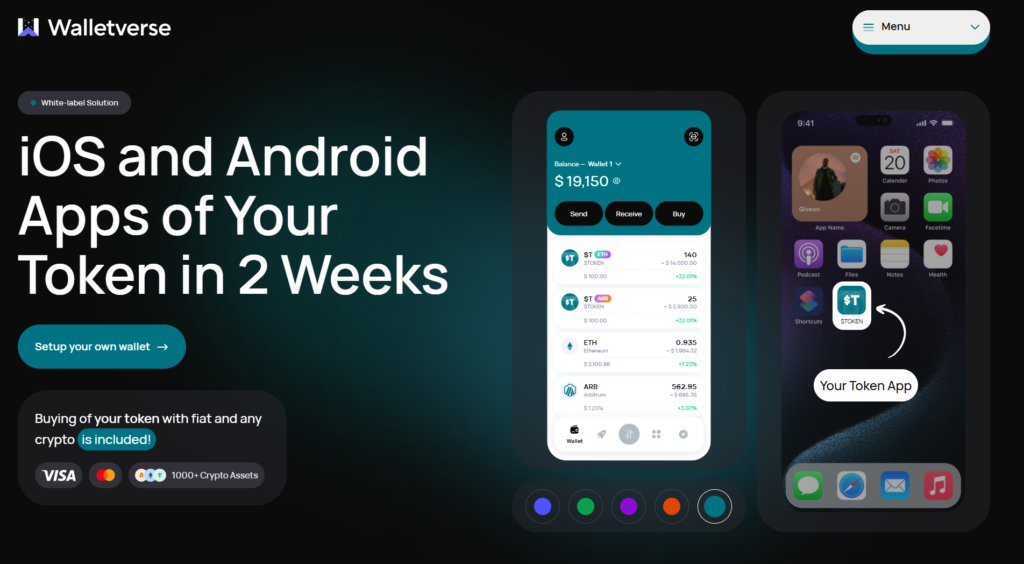
Walletverse is an excellent example of a white label crypto wallet solution that enables businesses to launch their own cryptocurrency and manage digital assets securely. Walletverse supports over 1000 cryptocurrencies, allowing businesses to create custom wallets that are tailored to their specific tokenomics and brand.
Key features of Walletverse include:
- Customizable design and functionality. Businesses can personalize the wallet’s appearance and integrate features such as staking, reward tracking, and DeFi support to enhance user engagement with the new cryptocurrency.
- Security and privacy. Walletverse offers advanced security features, including cold storage, encryption, and multi-signature protection, ensuring that users’ digital assets are secure.
- KYC/AML compliance. The wallet can integrate compliance features, helping businesses adhere to regulatory requirements and ensuring a safe environment for users.
- Cross-platform compatibility. Walletverse supports both mobile and desktop platforms, allowing users to manage their cryptocurrencies from anywhere, at any time.
- Integration with payment systems. Businesses can offer seamless payment solutions by integrating traditional payment methods such as Visa, MasterCard, Google Pay, and Apple Pay.
Launching your own cryptocurrency can seem like an overwhelming task, but white label crypto wallets like Walletverse offer an effective way to simplify the process. These wallets provide businesses with the tools to create a secure, user-friendly platform that supports the management of their new cryptocurrency. By offering customizable features, robust security, regulatory compliance, and multi-currency support, white label crypto wallets empower businesses to quickly launch and manage their cryptocurrency while delivering a seamless experience for users.