

In the global remittance market, which is crucial for the economies of many developing countries, blockchain technology is revolutionizing how money is sent across borders. White label crypto wallets are at the forefront of this transformation, offering customizable, secure, and efficient tools for managing and sending remittances.
Background on Remittances
Traditionally, sending remittances has involved high costs, slow transaction speeds, and access issues, particularly in less urbanized areas. These remittances are a lifeline for millions, making the need for more efficient solutions critical. Blockchain technology presents a promising alternative, offering the potential to bypass traditional financial intermediaries, reduce transaction fees, and speed up the process.
Transition to Blockchain-Based Remittances
The shift from conventional remittance systems to blockchain-based methods marks a significant advancement. Blockchain remittances leverage the technology’s inherent transparency, security, and efficiency—characteristics that are especially beneficial in financial transactions involving multiple countries.
Role of White Label Crypto Wallets in Blockchain Remittances
White label crypto wallets provide the infrastructure necessary for blockchain remittances. These wallets can be customized by remittance companies to match their branding, thus not only enhancing user trust but also providing a tailored experience that addresses specific market needs and regulatory requirements.
Key Features of White Label Crypto Wallets for Remittances
- Multi-currency support. They support various cryptocurrencies and fiat currencies, facilitating cross-border transactions in multiple currencies.
- Security features. Advanced security measures such as encryption and multi-factor authentication protect users’ funds and personal information.
- User-Friendly interface. An intuitive interface is crucial for adoption, ensuring that all users, regardless of their technological expertise, can easily send and receive remittances.
- Integration capabilities. These wallets seamlessly integrate with existing financial systems and other digital payment platforms, enhancing their utility.
Benefits of Using White Label Crypto Wallets for Remittances
- Cost efficiency. Blockchain remittances via white label wallets significantly reduce the fees associated with traditional remittance channels.
- Speed and accessibility. Transactions are processed almost instantaneously, and can be conducted from anywhere, providing essential services to underbanked populations.
- Inclusivity. They offer financial services to the unbanked, expanding economic opportunities and financial inclusion.
Challenges and Potential Solutions
- Regulatory compliance. Crypto wallets must navigate diverse regulatory frameworks, a challenge that can be addressed through adaptable compliance features within the wallet software.
- Market adoption. Encouraging traditional users to switch to blockchain solutions requires demonstrating reliability, cost-effectiveness, and ease of use.
- Volatility of cryptocurrencies. Strategies like immediate conversion to stablecoins or local fiat upon transaction completion can mitigate the risks associated with volatility.
Highlighting Walletverse
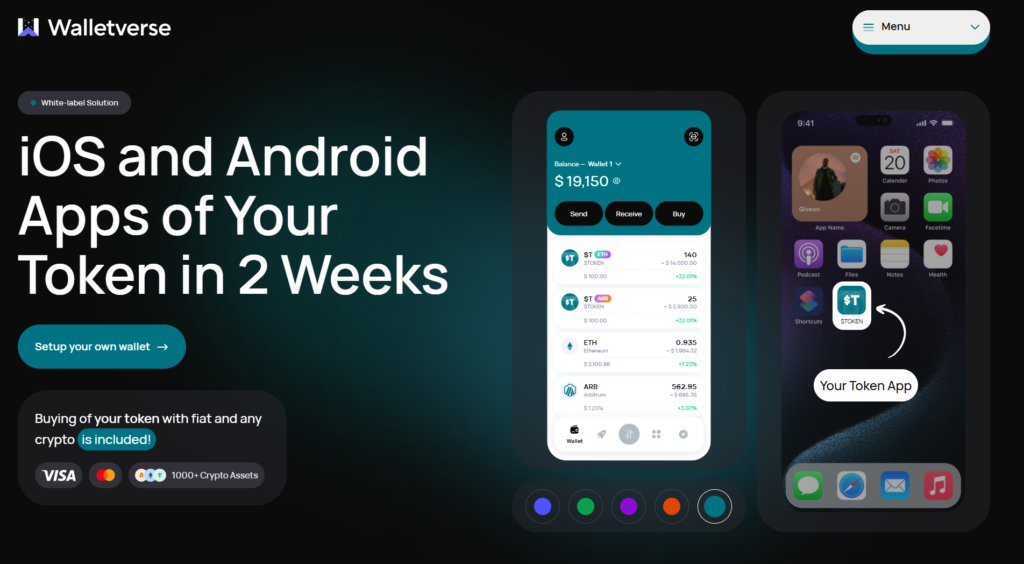
An exemplary model in this sector is Walletverse, a versatile white label crypto wallet known for its robust security features and comprehensive support for over 1000 cryptocurrencies. Walletverse offers an ideal solution for remittance companies looking to adopt blockchain technology, providing tools like biometric security, advanced encryption, and easy integration with payment systems like Visa, MasterCard, Google Pay, and Apple Pay. This ensures that even companies new to blockchain can launch a secure and compliant remittance service in a matter of weeks.
White label crypto wallets like Walletverse are revolutionizing the remittance industry by leveraging blockchain technology to offer faster, cheaper, and more accessible money transfer services. As digital currencies continue to gain traction, these wallets are set to play a pivotal role in shaping the future of global remittances, providing a bridge between traditional financial systems and innovative blockchain solutions. This shift not only enhances the remittance landscape but also propels financial inclusion forward, making it an essential development in the global economy.