

As cryptocurrencies continue to grow in popularity, the demand for secure, easy-to-use solutions for managing digital assets has never been higher. White label crypto wallets, which provide businesses with customizable, ready-made solutions for offering cryptocurrency storage and transactions to their customers, have become an essential tool in this space. However, with growing concerns about privacy and security, it’s crucial to strike the right balance between ensuring a high level of privacy while maintaining a smooth and user-friendly experience.
For businesses, offering a wallet that is both private and easy to use is a key differentiator in a competitive market. Achieving this balance requires careful design and the integration of advanced security features, all while ensuring the wallet remains intuitive for users, whether they are cryptocurrency experts or beginners.
In this article, we’ll explore how white label crypto wallets are navigating the intersection of privacy and usability, highlighting the challenges and solutions businesses must consider when providing their customers with a safe and efficient digital wallet experience.
What Are White Label Crypto Wallets?
White label crypto wallets are pre-built cryptocurrency wallet solutions that businesses can customize and brand as their own. These wallets allow users to securely store, send, and receive digital assets, while businesses can tailor the look, feel, and features to suit their specific needs. White label solutions offer a fast and cost-effective way for businesses to enter the cryptocurrency space, as they eliminate the need for complex development and infrastructure.
For businesses, white label wallets are not just a tool for cryptocurrency management; they are an essential part of the customer experience. A key component of this experience is ensuring that users’ private data and digital assets are protected, while also ensuring that interacting with the wallet is simple and intuitive.
The Importance of Privacy in White Label Crypto Wallets
Privacy is one of the most important factors when it comes to cryptocurrency wallets. Unlike traditional banking, where financial transactions are mediated by banks and other institutions, cryptocurrencies enable users to directly control their assets. This level of autonomy is part of the appeal of blockchain technology, but it also means that users are solely responsible for the security of their wallets and assets.
Given the decentralized nature of cryptocurrencies, privacy plays a significant role in protecting user identities and transactions from surveillance, hacking, or unauthorized access. As blockchain networks become more public, businesses must take extra precautions to protect their users’ personal information and transaction details.
Key Privacy Features in White Label Crypto Wallets:
- Non-custodial solutions. One of the most effective ways to ensure privacy is by offering non-custodial wallets. In a non-custodial wallet, users control their private keys, meaning they are the only ones who can access their funds. This removes the risk of third-party service providers having access to sensitive data. Non-custodial wallets help businesses reduce their liability and increase trust with users.
- End-to-end encryption. End-to-end encryption ensures that all data exchanged between users and the wallet is encrypted and unreadable to any unauthorized parties. By implementing this encryption method, businesses can protect users’ personal and transaction data, even if the wallet is compromised.
- Zero-knowledge proofs. Zero-knowledge proofs allow a user to prove they have certain information (like a private key or transaction details) without actually revealing the information itself. Integrating zero-knowledge proofs into a white label crypto wallet can enhance privacy by ensuring that sensitive data is never exposed, while still enabling the validation of transactions.
- Anonymity and pseudonymity. Providing users with the ability to operate anonymously or pseudonymously is essential in a privacy-focused crypto wallet. Features such as private transactions (via privacy coins like Monero or Zcash) and mixing services help obscure transaction details and ensure that users’ identities remain protected.
The Importance of Usability in White Label Crypto Wallets
While privacy is crucial, usability is just as important for the adoption and success of a white label crypto wallet. Cryptocurrency, as a concept, is still relatively new to many users, and making it easy for them to interact with digital assets is essential for broad adoption.
Usability in a crypto wallet refers to how easy it is for users to store, send, receive, and manage their digital assets. An intuitive and user-friendly wallet ensures that even non-technical users can navigate the complexities of cryptocurrency without feeling overwhelmed or confused.
Key Usability Features in White Label Crypto Wallets:
- Simple user interface (UI). A well-designed UI is essential for a smooth user experience. White label wallets should feature clean, straightforward interfaces that make it easy for users to check their balances, send funds, or interact with smart contracts. Customizable interfaces can also ensure that businesses align the wallet’s look and feel with their brand.
- Multi-currency support. With the ever-growing number of cryptocurrencies, users may want to store and manage multiple digital assets in one place. Offering multi-currency support in white label crypto wallets makes it easier for users to manage their portfolios in a single wallet without having to rely on multiple applications.
- One-click transactions. Simplifying transaction processes is key to improving usability. Features such as one-click transactions or saved wallet addresses make it easier for users to send and receive funds without having to navigate complex procedures.
- Cross-platform compatibility. Ensuring that the wallet is accessible across multiple platforms (mobile, desktop, and web) makes it more convenient for users to access their wallets and manage their funds from any device. This flexibility is especially important in an increasingly mobile-first world.
Achieving the Balance — Privacy and Usability in White Label Wallets
The challenge for businesses lies in balancing privacy with usability. While it is essential to integrate strong privacy features, doing so should not come at the cost of a poor user experience. Fortunately, businesses can implement strategies that maintain high levels of privacy while also ensuring ease of use.
1. Streamlined Authentication
While multi-factor authentication (MFA) is a critical privacy and security measure, it can sometimes create friction in the user experience. Balancing security and convenience can be achieved through methods such as biometric authentication (fingerprint or facial recognition) or integrating passwordless login features. These methods ensure robust privacy protection without complicating the login process.
2. Educational Tools and Support
Many users are unfamiliar with cryptocurrency and may not understand how to navigate the privacy features of their wallets. Offering built-in tutorials, customer support, and educational resources can help users understand how their data is being protected and how to use privacy-enhancing features effectively. A simple, clear explanation of privacy options, such as how to enable anonymous transactions or use advanced encryption features, can go a long way in increasing user confidence.
3. User Consent and Transparency
Being transparent about what data is collected and how it is used is vital for privacy. Offering users control over the data they share, such as providing the option to opt-in for data collection or to use privacy-enhancing features, builds trust and enhances usability. Clear consent mechanisms should be in place to allow users to choose how much information they share with the platform.
4. Optimized Transaction Processing
Incorporating privacy features, such as private transactions or blockchain mixers, should not significantly slow down transaction processing times. White label wallet providers can optimize the integration of these features to ensure that users can conduct transactions quickly and efficiently, without sacrificing privacy.
Walletverse — A Leading Example of Privacy and Usability
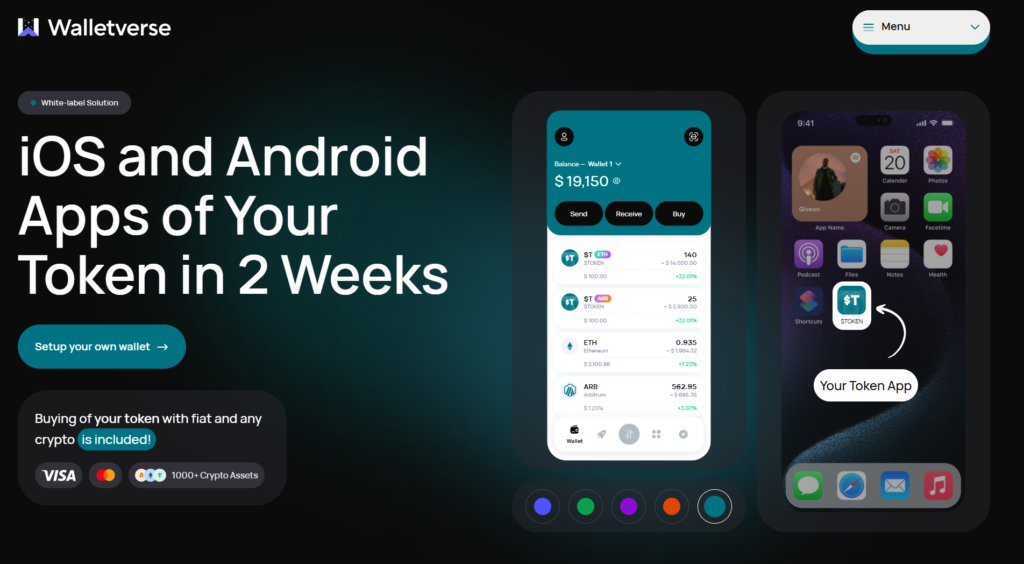
Walletverse is a white label crypto wallet solution that exemplifies the intersection of privacy and usability. Offering non-custodial solutions, Walletverse provides users with control over their private keys, ensuring their funds remain secure. The wallet also supports multi-currency management, end-to-end encryption, and integration with privacy coins, allowing users to protect their identity and transaction details.
Walletverse’s simple and intuitive interface makes it easy for businesses to integrate cryptocurrency solutions into their platforms, while its security features (such as biometric authentication and multi-signature protection) safeguard users’ assets. By striking the right balance between privacy and usability, Walletverse enables businesses to offer a seamless, secure wallet experience for their customers.
As the cryptocurrency industry continues to evolve, businesses must consider both privacy and usability when designing or adopting white label crypto wallets. While privacy protects users from surveillance and fraud, usability ensures that the wallet is intuitive, accessible, and practical for everyday use. White label solutions like Walletverse exemplify how businesses can meet these dual demands by providing users with secure, easy-to-navigate wallets that prioritize both privacy and user experience.