

As the world continues to embrace decentralized finance and digital assets, an exciting new application is gaining traction: local currencies and community tokens. These blockchain-based assets are designed to boost regional economies, incentivize civic participation, and foster closer community ties. At the core of this movement are white label crypto wallets, which offer a fast and customizable way to launch, manage, and distribute community-driven tokens. From municipalities to grassroots organizations, more groups are turning to these tools to build localized financial ecosystems that work for their people.
Understanding Local Currencies and Community Tokens
Local currencies are digital or tokenized forms of money intended for use within a specific region, city, or community. Similarly, community tokens are purpose-built assets that reward specific behaviors or grant access to exclusive community services. These tokens can serve various functions:
- Encourage local spending and business support.
- Reward participation in civic, educational, or environmental programs.
- Represent shared ownership or reputation within a decentralized network.
Examples include MiamiCoin, which supports city development initiatives, and nonprofit-issued tokens used to track and reward volunteer work. The power of these systems lies in their ability to drive engagement, create economic value, and reinforce local resilience.
The Role of White Label Crypto Wallets in Token Deployment
A white label crypto wallet is a customizable, ready-made digital wallet solution that can be branded and tailored to the needs of a specific organization, government, or community. For local currency and community token projects, white label wallets provide:
- Rapid deployment without the need to build a wallet from scratch.
- End-to-end control over features, branding, and user experience.
- Pre-built token integration, allowing seamless issuance and management.
This turnkey approach makes white label wallets the ideal foundation for launching local or community-based token economies.
Key Features for Local and Community Token Wallets
To serve the unique needs of community token ecosystems, white label wallets must include:
- Custom branding and localization. Support for local languages, regional design, and cultural relevance.
- Token management tools. Admin access to mint, burn, and track token distribution.
- Incentive engines. Configurable systems to reward desired behaviors (e.g., recycling, voting, shopping locally).
- Offline transaction support. Enable access and usability in areas with limited connectivity.
- Regulatory readiness. Built-in KYC/AML tools to comply with local legal frameworks.
These features ensure that local tokens are not only functional but also intuitive and accessible for everyday users.
Benefits for Communities and Local Governments
Deploying a local currency or community token through a white label wallet offers transformative benefits:
- Economic stimulation. Closed-loop token systems keep spending within the community.
- Civic engagement. Encourage participation in local programs with token-based rewards.
- Behavioral incentives. Drive sustainability or health initiatives through tokenized rewards.
- Transparency and trust. Blockchain immutability ensures that token issuance and spending are visible and verifiable.
These solutions empower communities to take control of their economies while building stronger social cohesion.
Real-World Use Cases
Local and community token projects are emerging across sectors:
- Municipal tokens. Used for discounted services, tax credits, or subsidized transport.
- Neighborhood co-ops. Issue spending vouchers for local produce or shared services.
- Events and festivals. Launch short-term tokens for exclusive access and perks.
- Small business networks. Share loyalty tokens across partner businesses.
- Humanitarian aid. Nonprofits distribute programmable aid credits for food, shelter, or education.
Each use case leverages tokens not only for financial transactions but as a means of fostering purpose-driven engagement.
Challenges and Considerations
While promising, local token projects must navigate several challenges:
- Legal classification. Understanding whether the token is a utility, currency, or security.
- Adoption barriers. Educating users unfamiliar with crypto.
- On/off-ramp availability. Ensuring tokens can be converted if necessary.
- Wallet usability. Designing intuitive interfaces for non-technical users.
By addressing these concerns early, communities can launch successful and sustainable digital token programs.
Future Outlook: Tokenized Communities at Scale
As Web3 infrastructure matures, local and community tokens will play an even greater role in shaping decentralized governance and economic innovation. We’ll see:
- Tokenized DAOs. Local governments or co-ops governed by token-based voting.
- Interoperable ecosystems. Cross-community tokens shared between cities or cooperatives.
- Smart tokenomics. AI-assisted management of supply, incentives, and circulation.
- Decentralized identity integration. Credentials linked to wallet-based community participation.
These trends point toward a future where communities manage their own economies—digitally, securely, and transparently.
Walletverse for Local Currency Projects
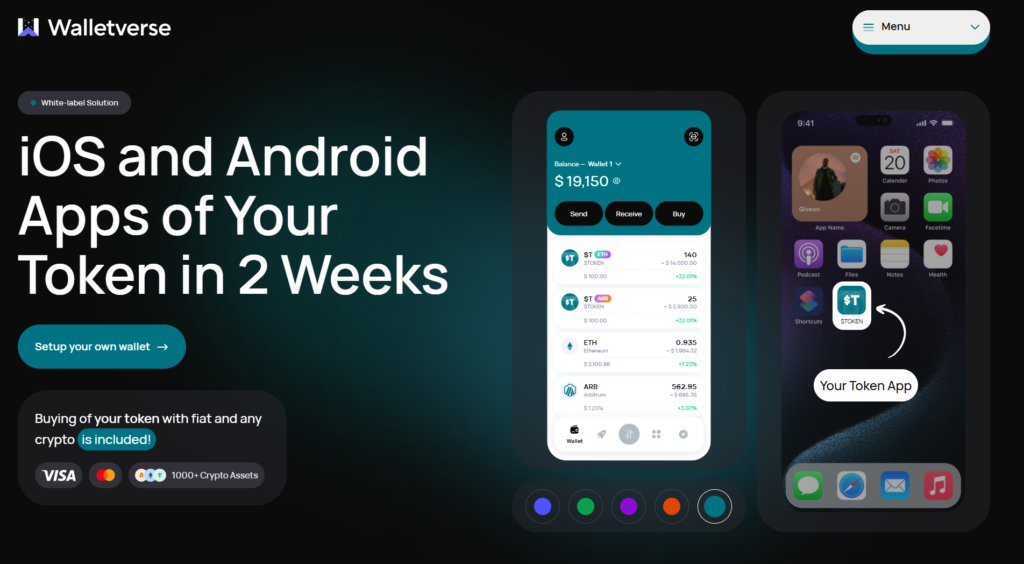
Walletverse is a non-custodial, mobile-first white label crypto wallet designed to support local currencies and community token initiatives.
Perfect for cities, NGOs, co-ops, and neighborhood organizations, Walletverse enables rapid deployment of custom-branded wallets with support for 1000+ tokens.
Key features include:
- Offline transaction capabilities
- Multi-language and region-specific UI
- CryptoAES and ECDSA encryption
- Biometric authentication and AML/KYC integration
- Support for Visa, Mastercard, Apple Pay, and Google Pay
Walletverse allows communities to launch their own wallet in just two weeks, creating secure and user-friendly ecosystems that empower local economies and civic innovation.
In an age of economic decentralization and digital empowerment, white label crypto wallets provide the tools for communities to build their own resilient financial systems. Whether it’s a city-backed token, a neighborhood co-op voucher, or a grassroots nonprofit initiative, white label wallets make it possible to launch and manage community-driven currencies that align with local values and goals.
By embracing blockchain and user-friendly wallet infrastructure, communities can redefine how value is created, shared, and sustained—on their own terms.