

In the digital economy, affiliate and referral marketing has long been a cornerstone for acquiring new users and scaling platforms. From e-commerce giants to SaaS platforms, businesses have leveraged affiliate programs to drive growth through word-of-mouth and influencer partnerships. As the Web3 space continues to mature, it too requires scalable, transparent, and decentralized solutions for user acquisition. White label crypto wallets are emerging as a powerful foundation for enabling next-gen referral systems—complete with token rewards, smart contract automation, and full brand control.
The Evolution of Affiliate Marketing in the Digital Economy
Affiliate marketing has traditionally involved third-party influencers or users promoting a product or service in exchange for a commission on each referral. While effective, these systems come with challenges:
- Delayed payouts due to manual verification.
- Fraud and multi-account abuse.
- Lack of transparency for both affiliates and brands.
- Centralized control over commissions and tracking.
In contrast, Web3 affiliate marketing—powered by smart contracts and token-based systems—offers real-time payments, immutable tracking, and decentralized trust.
Why Web3 Needs a New Kind of Referral Infrastructure
Web3 projects—from DeFi protocols and NFT platforms to blockchain games and crypto exchanges—are competing in a crowded, rapidly evolving space. Traditional advertising is expensive and often ineffective. Community-driven growth is key.
In this context, referral and affiliate programs must:
- Be trustless and transparent.
- Offer instant, programmable rewards.
- Be integrated directly into user wallets, not outsourced or siloed.
This is where white label crypto wallets provide a clear advantage.
How White Label Crypto Wallets Enable Referral and Affiliate Campaigns
White label wallets are fully customizable wallet solutions that can be branded and tailored to any project’s ecosystem. For affiliate and referral marketing, they offer built-in infrastructure for:
- Unique referral links or codes tied to wallet addresses.
- Smart contract-powered payouts that trigger instantly when predefined actions (e.g., a sign-up, token purchase, or transaction) are completed.
- Multi-tier affiliate structures for influencer networks and community ambassadors.
- Analytics dashboards for tracking conversions, commissions, and ROI.
With no middlemen or third-party tracking platforms, everything is recorded on-chain—securely, transparently, and in real time.
Key Features for Web3 Affiliate Marketing in White Label Wallets
To effectively power decentralized referral campaigns, a white label wallet should offer:
- Referral ID generation linked to the wallet’s public key.
- Customizable smart contract payouts (percentage-based, milestone-based, or fixed).
- Token reward system integration—governance tokens, stablecoins, or even NFTs.
- Anti-fraud mechanisms such as device fingerprinting, KYC integration, and activity thresholds.
- Multilingual support and simple onboarding to drive adoption in global markets.
These tools allow projects to incentivize real engagement while retaining full control over the experience.
Benefits for Projects, Partners, and Users
For Projects:
- Cost-effective user acquisition via community advocacy.
- Data ownership and performance visibility.
- Scalability across verticals and geographies.
For Affiliates:
- Transparent, real-time payouts.
- On-chain proof of referrals and commissions.
- Participation in community growth and governance.
For Users:
- Token rewards for inviting friends or promoting the platform.
- Exclusive perks tied to referrals, like early access or fee discounts.
- Seamless tracking and withdrawal of earned rewards.
This triangle of benefits creates a powerful incentive loop that fuels both engagement and growth.
Use Cases Across the Web3 Ecosystem
White label wallets with referral systems can be used in numerous scenarios:
- DeFi platforms incentivizing new liquidity providers.
- NFT marketplaces rewarding users for artist or buyer onboarding.
- Crypto gaming apps giving players bonuses for referring new users.
- DAO-funded communities building grassroots ambassador programs.
- Token launches distributing referral-based airdrops with automated eligibility checks.
These examples highlight the versatility of wallet-native affiliate systems in Web3.
The Future of On-Chain Affiliate Systems
Looking ahead, the next wave of referral innovation in Web3 will include:
- Cross-platform referral tracking using decentralized identity (DID).
- DAO-governed affiliate structures with token-based voting on program parameters.
- NFT-based affiliate credentials for verifying and ranking influencer performance.
- Referral reputation scores that grow with user influence and successful conversions.
These tools will enable interoperable affiliate systems that span ecosystems—creating a unified, on-chain marketing layer for Web3.
Walletverse and Web3 Referral Marketing
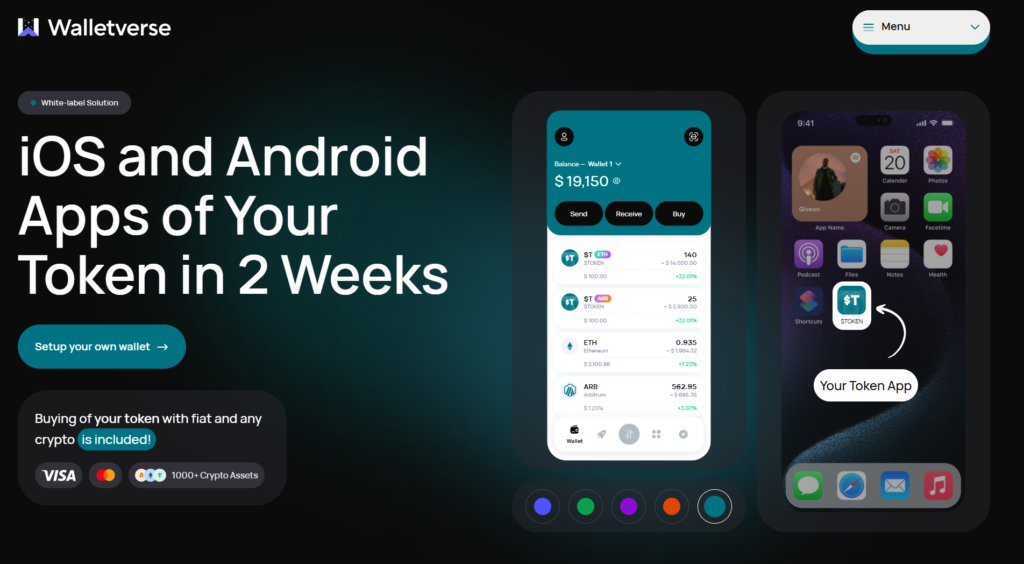
Walletverse is a non-custodial, mobile-first white label crypto wallet designed to power modern Web3 growth strategies.
It includes robust tools for referral link generation, real-time smart contract commissions, and in-app analytics—making it perfect for affiliate-driven projects.
Key features:
- Support for over 1000 cryptocurrencies, DeFi, NFT, and fan token integration.
- Biometric authentication, CryptoAES, ECDSA, and AML/KYC compliance.
- Branded wallet deployment in just two weeks, fully customizable to fit any token economy or referral model.
Walletverse gives projects everything they need to launch and scale referral-based user acquisition with complete ownership and security.
As Web3 redefines digital interaction and ownership, affiliate and referral marketing must evolve too. By embedding these systems directly into white label crypto wallets, projects can automate rewards, build trust, and grow faster—without the inefficiencies of Web2 infrastructure.
For any platform looking to scale through community-driven growth, wallet-native referral tools offer a compelling, future-proof solution. It’s not just about marketing—it’s about monetizing trust, at the speed of blockchain.