

As the cryptocurrency ecosystem expands, so does the complexity of managing digital assets. Users often find themselves juggling multiple wallets, platforms, blockchains, and interfaces to access their tokens, NFTs, and DeFi tools. This fragmentation creates friction, reduces security, and undermines the user experience. In response, businesses are increasingly turning to white label crypto wallet solutions to provide unified, secure, and branded access across devices. These cross-platform wallets are shaping the future of how users interact with crypto—seamlessly and securely.
What Is Cross-Platform Cryptocurrency Management?
Cross-platform cryptocurrency management refers to the ability to access and control digital assets,regardless of the device or interface used. Whether on mobile, web, desktop, or within a decentralized application (dApp), users expect consistency, synchronization, and ease of use. The rise of DeFi, NFTs, staking, and crypto payments has only heightened this expectation.
However, many users still rely on disparate apps and browser extensions that don’t sync or align well with each other. Cross-platform crypto wallets address this pain point by offering a single, secure experience across all touchpoints, allowing for real-time access, multi-device functionality, and unified control.
The Role of White Label Crypto Wallets in Solving Fragmentation
White label crypto wallets provide a flexible framework that businesses can customize, brand, and deploy under their own name. More importantly, they allow companies to offer cross-platform wallet functionality—enabling users to access the same wallet across mobile apps, desktop interfaces, and web browsers.
By deploying a white label wallet, businesses can:
- Offer consistent UX/UI across all platforms
- Synchronize user data securely and in real-time
- Enable access to NFTs, DeFi protocols, staking, and token management everywhere
- Maintain brand integrity with custom design and features
- Avoid the cost and complexity of building from scratch
This makes white label solutions ideal for exchanges, neobanks, NFT marketplaces, and DeFi platforms looking to deliver a seamless user experience.
Essential Features for Cross-Platform Crypto Management
To ensure effective management of digital assets across devices, a robust white label wallet must offer:
- Responsive UI/UX. Optimized interfaces for mobile, desktop, and web apps.
- Secure syncing. Encrypted cloud or local syncing to maintain data consistency.
- Multi-chain support. Compatibility with Ethereum, Bitcoin, BNB Chain, Polygon, and more.
- dApp & DeFi integration. Access to decentralized finance protocols via integrated browsers or wallet-connect features.
- Key management across devices. Private keys must remain secure, whether on mobile or desktop.
- QR code login & WalletConnect. Simple, secure authentication methods for multi-device access.
These features ensure users can engage with the crypto ecosystem without friction or security trade-offs.
Business Advantages of Offering a Cross-Platform Wallet Experience
For companies offering crypto services, delivering a cross-platform wallet unlocks major advantages:
- Higher user retention. Smoother experiences across devices keep users engaged.
- Brand consistency. A unified interface builds credibility and reinforces brand identity.
- Increased revenue streams. More opportunities to monetize through trading, staking, or premium features.
- Wider market reach. Cater to users who switch between mobile, desktop, and browser environments.
- Stronger security posture. Reduce vulnerabilities from third-party apps and extensions.
With a single white label infrastructure, companies can provide a comprehensive and cohesive crypto offering.
Walletverse: A Cross-Platform-Ready White Label Crypto Wallet
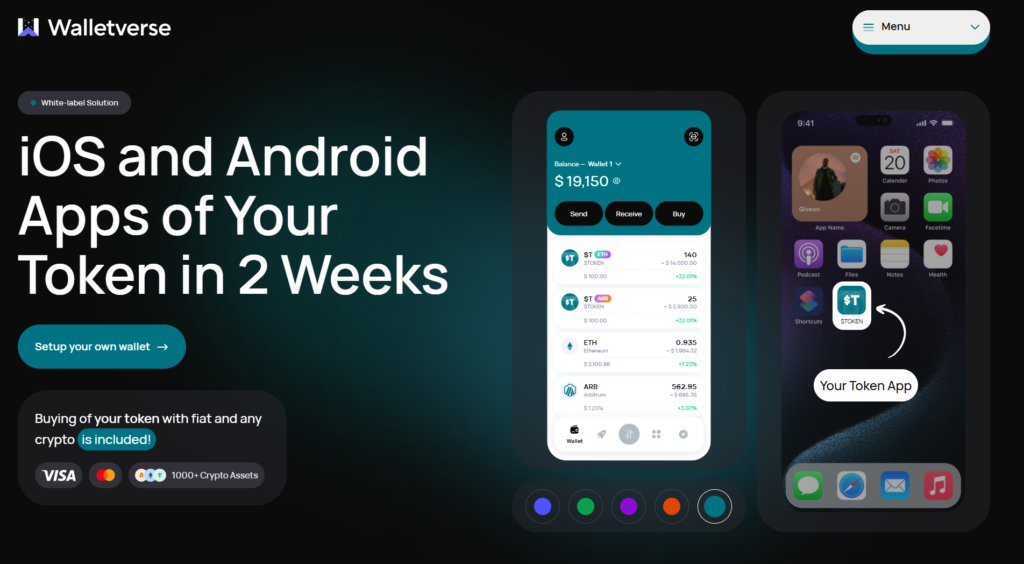
Walletverse is a non-custodial white label crypto wallet designed to support full cross-platform functionality. Businesses can deploy their own branded wallet solution in just two weeks—with support for more than 1000 cryptocurrencies, real-time trading, and DeFi integrations.
Key features that enable cross-platform management include:
- Seamless access across mobile and web platforms
- dApp browser and NFT support
- Biometric login and passcode authentication
- Integration with Visa, MasterCard, Apple Pay, and Google Pay
- Cloud-based key management and secure syncing
- Advanced encryption with CryptoAES and ECDSA
- Full compliance with OWASP SAST, BIP32, BIP39, BIP44 standards
- Secure entropy storage with 128-bit and 256-bit options
Walletverse gives companies the tools to offer a consistent, secure, and scalable wallet experience across all user touchpoints.
Real-World Applications of Cross-Platform Wallets
Cross-platform white label wallets are already transforming how crypto services are delivered:
- Crypto exchanges offer companion wallets that function on both mobile and web.
- DeFi platforms provide users with staking, yield farming, and governance access across interfaces.
- NFT marketplaces enable users to view, trade, and store digital assets on any device.
- Payment providers support QR-based checkout in physical stores, online platforms, and dApps.
These real-world applications demonstrate the versatility and value of unified wallet ecosystems.
Implementation Steps for Businesses Launching Cross-Platform Wallets
To roll out a cross-platform white label wallet, businesses should follow these steps:
- Choose a provider with a solid cross-device SDK and syncing architecture.
- Map out workflows for mobile, web, and desktop interfaces.
- Customize the UX/UI to reflect your brand and support your services.
- Implement shared authentication (e.g., QR login, passphrase sync).
- Test extensively across all platforms and onboard users with clear tutorials.
With this roadmap, companies can deploy wallet solutions that meet modern expectations for access, speed, and security.
Conclusion: Unified Access Is the Future of Crypto Wallets
As the crypto economy matures, the demand for unified access and seamless cross-platform management will only grow. Users want to interact with their assets,from trading and payments to NFTs and staking,across all devices, without compromising security or usability. White label crypto wallets are empowering businesses to meet that demand with scalable, branded, and highly secure solutions.
Solutions like Walletverse are paving the way for a more interconnected and user-centric crypto future—where consistent access, transparency, and control come together to define the next generation of digital asset management.