

Trust is the foundation of every successful financial institution. Whether it’s a traditional bank, a neobank, or a crypto-first fintech platform, customers must feel confident that their assets and data are secure. However, rising concerns around cybersecurity, regulatory compliance, and digital privacy have made it increasingly difficult for financial services to maintain user trust. In this landscape, white label crypto wallet solutions have emerged as powerful tools to reinforce transparency, enhance control, and offer secure, branded experiences that strengthen customer relationships.
The Evolving Role of Crypto Wallets in Financial Services
Crypto wallets have evolved far beyond simple storage tools. Today, they function as gateways to decentralized finance (DeFi), digital identity, cross-border payments, and even tokenized investment products. Financial institutions are now adopting white label crypto wallets to keep pace with user expectations and new asset classes. These customizable wallets allow banks, fintechs, and investment platforms to offer crypto capabilities under their own brand, while giving customers confidence that their assets are secure and transactions are fully traceable.
What Makes White Label Crypto Wallets Trustworthy?
White label crypto wallets are particularly well-suited to boosting customer trust for several reasons:
- Custom branding. Institutions can align the wallet experience with their existing brand identity, which builds familiarity and credibility.
- Non-custodial design. These wallets empower users with full control over their private keys and funds—reducing reliance on third parties.
- Blockchain transparency. Every transaction is recorded immutably on-chain, enhancing visibility and accountability.
- Auditability. Advanced platforms support compliance audits, reporting tools, and even open-source modules for verification.
- Enterprise-level security. These wallets adhere to rigorous encryption and security standards to protect user data and funds.
Together, these attributes form a foundation for trust in the modern financial experience.
Key Features That Enhance User Trust in White Label Wallets
Trust is not just a concept—it’s reinforced through specific features and interactions. White label crypto wallets often include:
- Biometric authentication & passcodes. Added layers of identity verification protect against unauthorized access.
- Multi-signature wallets. Ideal for business accounts or shared custody, requiring multiple approvals to initiate transactions.
- Real-time alerts. Instant notifications keep users informed of every movement in their wallet.
- AML/KYC integration. Compliance tools ensure the wallet adheres to regulatory standards.
- Cold storage & entropy security. Secure offline storage options and advanced seed phrase management reduce the risk of theft.
- User-friendly recovery options. Educating users on backup and recovery procedures builds confidence in managing digital assets.
These features ensure that users feel in control, protected, and informed at every stage.
How White Label Wallets Improve Transparency and Security
Blockchain technology itself is a trust enhancer. Transactions are recorded on a public ledger, which can be verified in real time and cannot be altered retroactively. By integrating this transparency into a familiar interface, white label wallets give users the best of both worlds—modern crypto capabilities with the professionalism of traditional finance.
Institutions also benefit from blockchain-based transaction audits, real-time compliance reporting, and reduced fraud risks. From a customer perspective, this level of openness contributes to long-term loyalty and a sense of security.
Walletverse: Building Trust Through Enterprise-Grade Crypto Wallet Infrastructure
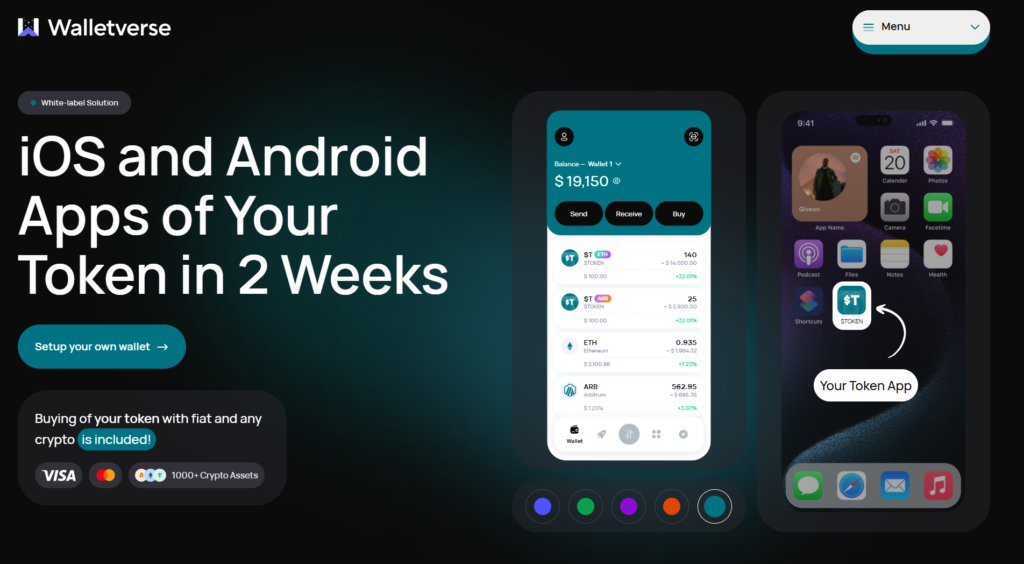
Walletverse is a non-custodial, mobile-first white label crypto wallet solution built to help businesses launch secure and scalable digital asset platforms under their own brand. Supporting over 1000 cryptocurrencies and deployable in just two weeks, Walletverse is designed with both user trust and business flexibility in mind.
Key trust-building features of Walletverse include:
- Biometric protection and passcode security
- AML-ready architecture for regulatory compliance
- Advanced encryption using CryptoAES and ECDSA
- OWASP SAST scanning to eliminate vulnerabilities
- Support for BIP32, BIP39, and BIP44 seed phrase protocols
- Secure entropy storage with 128-bit and 256-bit configurations
- Payment integration via Visa, MasterCard, Apple Pay, and Google Pay
With Walletverse, financial institutions can offer clients a branded, secure, and transparent platform that empowers users while maintaining the highest standards of compliance and technical excellence.
Real-World Applications in Financial Services
White label wallets like Walletverse are already powering trust-centric use cases in finance:
- Neobanks. Offering crypto checking accounts with built-in trading and staking features.
- Wealth management platforms. Providing secure access to tokenized assets and on-chain investments.
- Crypto payment providers. Enabling businesses and consumers to transact globally with transparent records.
- Lending platforms. Facilitating crypto-collateralized loans with real-time wallet integrations and escrow features.
Each use case demonstrates the value of embedding secure, branded wallet technology into core financial services.
Steps for Financial Institutions to Build Trust with a White Label Wallet
For financial organizations ready to implement a white label crypto wallet, trust-building requires strategic planning:
- Choose a proven provider with a track record of security, compliance, and scalability.
- Align the UX/UI to match your brand values and customer expectations.
- Enable transparency with blockchain explorers, real-time transaction tracking, and user education.
- Ensure robust compliance by integrating AML/KYC tools and offering detailed reporting features.
- Provide responsive support and clear instructions for wallet use, backup, and recovery.
These steps ensure that the technology supports—not replaces—the relationship of trust between provider and customer.
Conclusion: Trust is Built with Transparency, Control, and Security
In a time when digital finance is evolving rapidly, white label crypto wallet solutions provide financial service providers with a critical advantage: the ability to build trust at scale. By offering branded, secure, and transparent wallet experiences, institutions can meet the rising expectations of modern users while maintaining the core values of privacy, control, and compliance. Platforms like Walletverse make it easier than ever to embrace innovation—without sacrificing trust.