

As the digital finance landscape evolves, white label crypto wallets have become crucial in facilitating peer-to-peer (P2P) transactions. These wallets enable users to send and receive digital currencies directly, without intermediaries, leveraging blockchain technology for enhanced security and efficiency.
Understanding White Label Crypto Wallets
White label crypto wallets are customizable software solutions that organizations can rebrand and deploy as their own. These wallets serve as the backbone for managing digital currencies and executing transactions on blockchain networks. Here’s a deeper look at their components and advantages:
- Core functionality. At their core, white label wallets manage cryptocurrency transactions and user security protocols. They handle key management, support multiple currencies, and ensure that all transactions are securely processed on the blockchain.
- Scalability and flexibility. These wallets are designed to scale, accommodating a growing number of users and transactions without degradation of performance. Flexibility is also a key feature, allowing businesses to add or remove functionalities according to their needs.
- Reduced development time and cost. Developing a crypto wallet from scratch is resource-intensive and requires significant time. White label solutions are pre-developed, meaning they come with the essential features that can be customized and branded, drastically reducing development time and cost.
- Regulatory compliance. Ensuring compliance with financial regulations is crucial. White label wallets often include features that help businesses adhere to anti-money laundering (AML) laws, know your customer (KYC) procedures, and other regulatory requirements.
- Integration capabilities. These wallets can be integrated with existing business systems and third-party services, enhancing functionality. This includes linking to payment gateways, customer management systems, and other financial software.
The Role of Crypto Wallets in P2P Transactions
Crypto wallets are more than just storage for digital currencies; they are active tools that facilitate the direct exchange of assets between parties. Here’s how they are pivotal in P2P transactions:
- Key management. Wallets manage cryptographic keys necessary for authorizing transactions. Users hold private keys giving them control over their funds, essential for executing P2P transactions without intermediaries.
- Blockchain interaction. Wallets interact with blockchain networks to execute transactions. They broadcast transaction details to the network, where they are verified and recorded in a decentralized ledger. This process ensures transparency and trust among participants.
- Security protocols. Security is paramount in P2P transactions. Crypto wallets implement various security measures such as encryption, multi-factor authentication, and secure key storage to protect against unauthorized access and fraud.
- Transaction verification. Crypto wallets also play a crucial role in the verification process. They verify transaction details such as the addresses and the transaction amount before sending it to the blockchain, ensuring accuracy and preventing errors.
- User experience. Enhancing the user experience is crucial for adoption. Crypto wallets provide an intuitive interface where users can easily send and receive cryptocurrencies, check their balances, and view their transaction history, making digital transactions accessible to a wider audience.
These expanded sections should provide a more comprehensive understanding of white label crypto wallets and their role in facilitating secure and efficient P2P transactions.
Technical Aspects
Delving deeper into the technical underpinnings, white label crypto wallets leverage a variety of technologies and standards to ensure functionality, security, and adaptability:
- Blockchain technology. At the heart of these wallets is blockchain technology, which provides a secure, transparent mechanism for recording transactions. Each transaction is encrypted and linked to previous transactions, creating a tamper-resistant chain.
- Smart contracts. Many white label wallets incorporate smart contracts to automate transaction processes. These are self-executing contracts with the terms of the agreement directly written into code, reducing the need for intermediaries and enhancing transaction speed.
- Security protocols. To safeguard user assets and data, white label wallets employ several security protocols. These include Advanced Encryption Standard (CryptoAES) for data security, Elliptic Curve Digital Signature Algorithm (ECDSA) for secure digital signatures, and compliance with Open Web Application Security Project (OWASP) standards for application security.
- Seed phrase security. For recovery purposes, wallets use a seed phrase, typically a series of words generated by the wallet. Compliance with standards like BIP32, BIP39, and BIP44 ensures that these phrases are created and managed securely, providing a backup mechanism for wallet recovery.
- Interoperability. Modern crypto wallets are designed to be interoperable across different blockchain networks. This is crucial for supporting transactions involving various cryptocurrencies and interacting with different blockchain-based applications.
Highlighting Walletverse
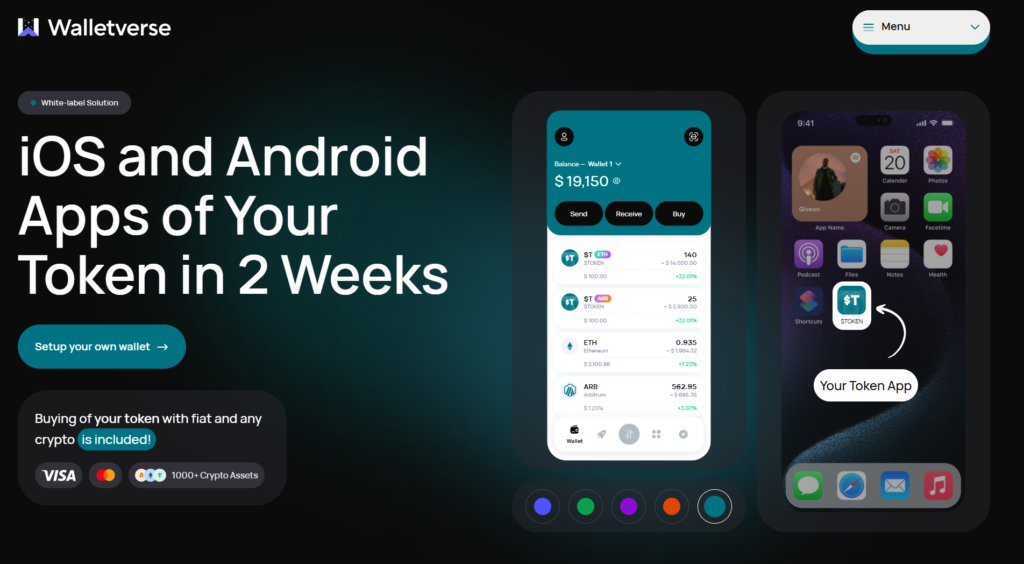
A notable example in the market is Walletverse, a non-custodial mobile cryptocurrency wallet offering a white label solution. It supports over 1000 cryptocurrencies and includes features like biometric protection, password codes, and integration with payment systems like Visa, MasterCard, Google Pay, and Apple Pay. Walletverse can launch a fully branded solution in just two weeks, incorporating advanced security measures like CryptoAES, ECDSA, and OWASP SAST, and adheres to BIP standards and secure storage protocols for seed phrases.
Benefits of P2P Transactions Using White Label Wallets
Peer-to-peer transactions facilitated by white label crypto wallets offer numerous advantages over traditional financial systems:
- Direct transactions. By eliminating intermediaries, P2P transactions become more direct and efficient. This not only reduces transaction times but also lowers the costs associated with fees that banks and other financial institutions typically charge.
- Decentralization. P2P transactions leverage the decentralized nature of blockchain, which means that no single entity controls the network. This enhances the security and reliability of transactions, as the decentralized ledger is resistant to fraud and manipulation.
- Financial inclusion. White label wallets can be a boon for financial inclusion, offering services to unbanked and underbanked populations. Since these wallets do not require traditional banking infrastructure, they can be accessed by a broader audience with basic internet connectivity.
- Enhanced privacy. Transactions through crypto wallets offer enhanced privacy compared to traditional banking systems. While transactions are transparent and traceable on the blockchain, the identity of parties can remain anonymous or pseudonymous if desired.
- Accessibility and convenience. With support for multiple payment gateways like Visa, MasterCard, Google Pay, and Apple Pay, white label wallets make it easier for users to convert and spend their cryptocurrencies like regular money. This accessibility increases the usability of cryptocurrencies in everyday transactions.
- Innovative features. Many wallets now support cutting-edge features like decentralized finance (DeFi) applications, non-fungible tokens (NFTs), and decentralized applications (dApps). These features not only provide more utility and options for users but also open up new avenues for businesses to engage with their customers.
White label crypto wallets play a transformative role in the way digital transactions are conducted. By providing secure, efficient, and user-friendly platforms, they are setting new standards in the financial industry.