

Financial inclusion remains one of the biggest challenges globally, with billions of people unable to access basic financial services. According to the World Bank, nearly 1.7 billion people worldwide remain unbanked, meaning they lack access to formal financial services such as savings accounts, loans, and insurance. This gap in financial access restricts economic mobility and perpetuates inequality.
The rise of cryptocurrencies, powered by blockchain technology, presents a potential solution to this problem. White label crypto wallets, in particular, offer businesses the opportunity to bridge the gap in financial inclusion by providing secure, easy-to-use, and decentralized solutions that enable anyone with a smartphone to access digital finance. This article explores the role of white label crypto wallets in promoting financial inclusion and how they are transforming access to financial services for unbanked populations.
What Are White Label Crypto Wallets?
White label crypto wallets are pre-built, customizable cryptocurrency wallet solutions that businesses can brand and deploy as their own. These wallets enable users to store, send, and receive digital assets such as Bitcoin, Ethereum, and other cryptocurrencies. White label solutions offer the advantage of customization, allowing businesses to tailor the wallet’s user interface, features, and functionality to their specific needs, while saving the time and cost of developing a wallet solution from scratch.
For small businesses, fintech startups, or large corporations, these wallets can be integrated into existing services to offer customers an easy way to manage digital assets, make payments, and engage in financial transactions. Importantly, white label wallets also provide users with a way to access decentralized financial services without needing a traditional bank account, making them a key player in promoting financial inclusion.
Financial Inclusion: What Does It Mean?
Financial inclusion refers to the availability and equality of access to financial services and products for all individuals, regardless of their income, social status, or geographic location. It encompasses access to:
- Basic banking services such as savings accounts, credit, and insurance.
- Affordable financial services like loans, mortgages, and credit.
- Digital payment systems that enable efficient and low-cost transactions.
For many people in developing countries or underbanked areas, traditional banking services are not accessible due to factors like lack of physical banking infrastructure, high fees, or the requirement for a minimum balance. White label crypto wallets, with their ability to operate on decentralized blockchain networks, provide an alternative path to accessing these services.
How White Label Crypto Wallets Enable Financial Inclusion
1. Access to financial services without traditional banks
Traditional financial institutions, particularly in rural or remote areas, are often inaccessible due to lack of infrastructure, limited reach, and high operating costs. White label crypto wallets provide an alternative that doesn’t rely on physical banks. As long as users have access to a smartphone and an internet connection, they can manage their finances via the wallet.
For instance, Walletverse, a white label wallet solution, allows businesses to create wallets that enable users to send, receive, and store cryptocurrencies. This decentralized approach eliminates the need for middlemen like banks, enabling anyone, regardless of their location or socioeconomic status, to participate in the global economy.
2. Lower barriers to entry
Creating and maintaining a bank account often comes with significant barriers such as high fees, minimum deposit requirements, and lengthy documentation processes. White label crypto wallets simplify this by removing many of these barriers. For example, users can create an account on a white label wallet platform like Walletverse with minimal requirements—typically just a smartphone and a mobile number or email address.
This lower barrier to entry makes it possible for underserved populations, such as those living in developing countries or in areas with few banks, to gain access to financial tools like savings and digital payments. By simply downloading the app, they can immediately start using the wallet and participating in the digital economy.
3. Enabling cross-border transactions
In many parts of the world, cross-border payments are costly and time-consuming. Traditional remittance services, such as Western Union, charge high fees for sending money internationally and require physical locations. White label crypto wallets provide a more cost-effective and faster alternative, allowing users to send funds across borders in a matter of minutes, with lower fees and no need for intermediaries.
With wallets like Walletverse, businesses can integrate cryptocurrencies that facilitate low-cost cross-border transactions, empowering people to send money to family members, businesses, or service providers without paying exorbitant fees. This makes financial services more accessible to people in developing countries, where cross-border payments are often a necessity.
4. Providing access to decentralized finance (DeFi)
Decentralized Finance (DeFi) is a rapidly growing sector that offers financial services—such as lending, borrowing, and trading—without the need for traditional intermediaries like banks. DeFi allows individuals to access financial services directly via smart contracts on blockchain networks.
White label crypto wallets are ideal for providing access to DeFi platforms. By integrating DeFi capabilities into the wallet, businesses can give users the ability to lend and borrow cryptocurrencies, stake digital assets, and even earn interest on their holdings, without requiring a bank or a credit score. This opens up a world of financial possibilities for individuals who have been excluded from traditional banking systems.
5. Improving financial literacy
One of the challenges for underserved populations is a lack of financial literacy. Many people are unaware of how to use digital tools or engage with modern financial systems. White label crypto wallets can be designed to include educational resources, tutorials, and easy-to-understand features that guide users in how to store, send, and invest their digital assets.
By integrating learning modules and financial tools into the wallet, businesses can help users build their financial knowledge and empower them to make better decisions about their money. This can be especially impactful for individuals in areas with limited access to financial education or banking services.
6. Offering microfinance and microcredit
One of the benefits of blockchain technology is the ability to tokenize assets and offer microfinance services that were previously unavailable to low-income individuals. White label crypto wallets can integrate microloan functionalities, allowing businesses to offer small loans or lines of credit to individuals without the need for a traditional credit score. This can help underserved populations access capital to invest in their businesses, education, or other needs.
For example, a small business owner in an underserved region could use a white label wallet to access a microloan in cryptocurrency, enabling them to expand their operations or invest in critical resources. This democratization of credit is crucial for financial inclusion and fostering economic empowerment.
Walletverse — A Key Player in Financial Inclusion
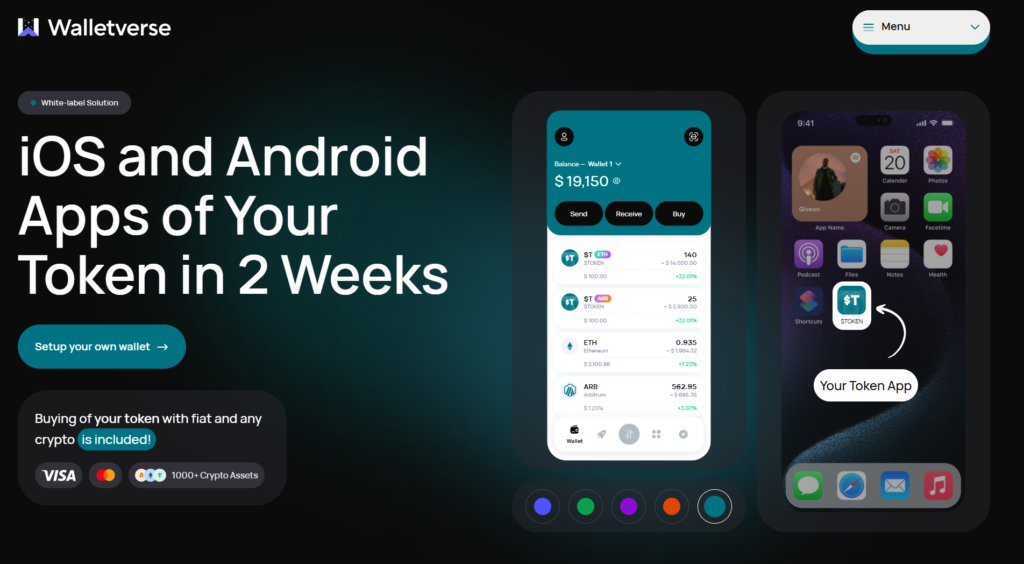
Walletverse is a powerful example of how white label crypto wallets can promote financial inclusion. By offering support for over 1000 cryptocurrencies and integrating features like DeFi, secure storage, and cross-border payments, Walletverse enables businesses to provide a comprehensive suite of financial services to their customers, regardless of location.
Walletverse’s customizable features allow businesses to tailor the wallet’s functionality to the specific needs of their target market. Whether it’s supporting microtransactions, integrating educational content, or offering cross-border payment capabilities, Walletverse helps businesses create solutions that foster financial inclusion and access to digital finance.
White label crypto wallets are at the forefront of a new era of financial inclusion. By providing users with secure, easy-to-use, and decentralized financial tools, these wallets help bridge the gap between underserved populations and the global financial system. They remove traditional barriers to entry, reduce the costs of financial transactions, and open up access to digital finance, all of which are crucial for empowering individuals and businesses in unbanked regions.